
“Commanded by retd. Hon. Captain Hazari Lal, Indian Army, -4x Mount Everest summiteer “
Goechala Trek
Embark on the breathtaking Goechala Trek, a spectacular Himalayan journey through dense forests, alpine meadows, and stunning mountain landscapes.
Get Callback in 10 Minutes
Goechala Trek Overview
Why is Goechala a Must-Do Trek ?
- The Goechala trek gives you the best views of the mighty Kanchenjunga, third highest peak in the world, glowing beautifully in golden hues at sunrise.
- Along with Kanchenjunga, marvel at the stunning panorama of other high Himalayan peaks, including Pandim, Rathong, Goecha, Japuno and Kabru, forming a beautiful skyline.
- The trek passes through the Kanchenjunga National park, a UNESCO world Heritage, and home to exotic wildlife including the Red pandas, Blue Sheep, Himalayan tahr and many more.
- Enjoy the beauty of Samiti Lake, a pristine alpine lake reflecting the towering peaks. Samiti Lake is a sacred and picture-perfect stop that adds to the trek’s charm.
- Trek through lush forests that come alive in spring with vibrant pink, purple, white and red rhododendrons, creating a fairytale-like setting.
- Experience the thrill of crossing hanging bridges over deep valleys and rushing rivers, adding an adventurous and cinematic touch to your journey.
- It is a less crowded trek that takes you through charming Sikkimese villages, where you can experience warm hospitality, traditional food, and visit Buddhist monasteries.
- The picturesque landscapes and a closer view of the vast towering peaks makes this trek a dream destination for every photography enthusiast.
Goecha La Trek – A Gem Among Sikkim Treks
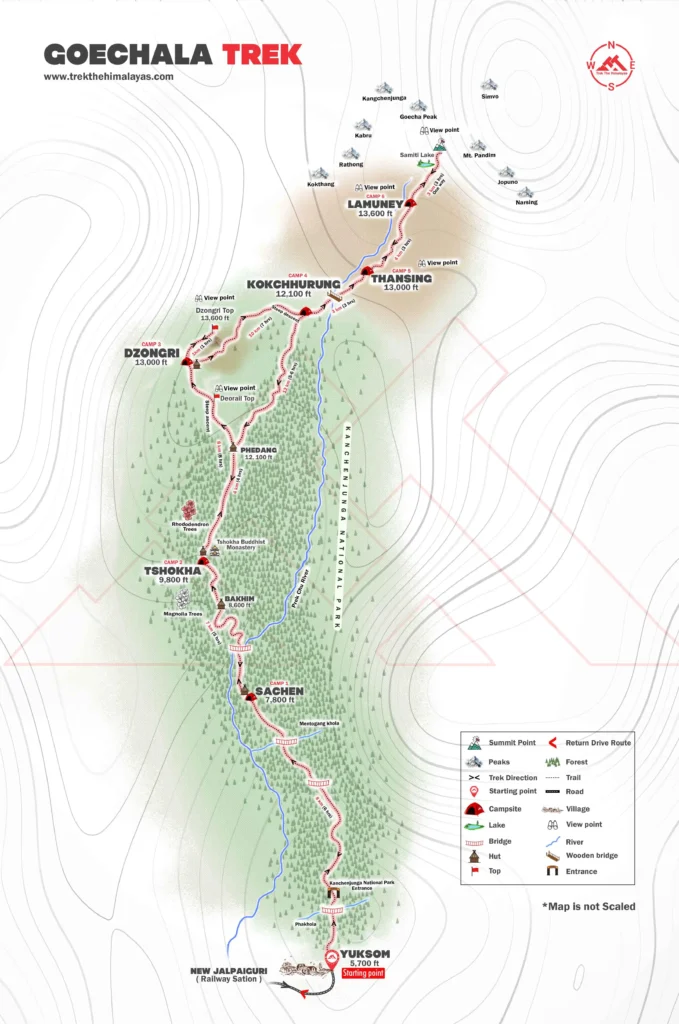
The Goechala trek in Sikkim is counted as one of the most scenic Sikkim treks. The trek takes you closest to the Kanchenjunga, the third highest peak in the world. The trek begins in Yuksom, taking you through amazing and scenic landscapes, it gets you back into Yuksom. Covering a distance of around 90 km, the trek usually takes about 11 days, making it a perfect challenge for those seeking both beauty and endurance. During the trek you can enjoy the stunning views of Mount Kanchenjunga, and a few other grand peaks of the Himalayas.
As you ascend through dense rhododendron forests, charming meadows, and rugged mountain trails, the journey unfolds like a magical story. The trek passes through Sachen, Tshoka, Dzongri, Thansing, Lamuney, and Samiti Lake, finally reaching the Goechala Viewpoint, where the sight of the mighty Kanchenjunga bathed in golden sunlight is nothing short of beauty. With a difficult grade, this trek demands good fitness and determination, while treating you with the best views, making every step worth it. What makes Goechala truly unique is its raw beauty, the peaceful solitude of the trails, the ever-changing landscapes, and the thrill of witnessing some of the world’s highest peaks up close.
Major Attractions of the Goecha La Trek
- Dense Alpine Jungles: The trek takes you through dense forests filled with a variety of trees giving you the best experience of trekking in Sikkim. At lower altitudes, you’ll mainly see oak, maple, and chestnut trees, while higher up, pine, fir, and juniper take over. The trail is also lined with beautiful flowering trees like rhododendrons, orchids, and magnolias, which bloom fully in spring, adding vibrant colors to the landscape. With an abundance of Rhododendrons, it is counted as one of the best Rhododendron treks. Few treks offer such rich greenery at such high altitudes, making this journey even more special.
- Prek Chu Bridge: Throughout the trek, you will come across many stunning suspension bridges, but one that truly stands out is the Prek Chu Bridge. This long and beautiful bridge stretches over the Prek Chu River, which flows through a deep gorge. As you walk across, you would surely pause, turn around, and take in the rare and mesmerizing view of the rushing water below.
- Tshoka Monastery: On your Goechala trek, you’ll come across a beautiful monastery near the Tshoka campsite. Nestled beside a still pond, the Tshoka Monastery looks even more serene and picturesque. To reach it, you’ll follow a trail leading out of the campsite and cross a wooden bridge. Finding a peaceful monastery in the middle of such a trek feels like discovering a hidden gem.
- Samiti Lake: One of the most scenic spots on the trek is the serene Samiti Lake, a stunning blue lake tucked among rugged mountains. Its calm and still waters, with the majestic Mt. Pandim in the backdrop creates mesmerizing scenery. In the early hours, the reflection of Mt. Pandim on the lake’s surface is a sight to behold.
- Sunrise on the Kanchenjunga Range The best part of the trek is watching the mountain peaks glow in the soft morning light. You can witness breathtaking sunrises from two stunning spots, Dzongri Top and Viewpoint 1. At Dzongri Top, you’ll see the Kanchenjunga range slowly change colors as the sun rises, while at Viewpoint 1, the peaks appear even closer and grander, offering a wider, more spectacular morning view. As the sun rises, the towering mountains shift through different shades, and the sky gradually brightens, creating a truly magical experience.
- Kanchenjunga National Park: Since the Goechala trek takes you through the Kanchenjunga National Park, you can spot a wide variety of flora and fauna. The area features dense forests and is home to a significant number of rare and threatened plants and animals. Few animals you could spot here are Jackal, Red Panda, Goral, Blue Sheep, Himalayan Tahr, and Musk Deer.
- Rich Culture: The colorful and lively culture of Sikkim is something you’ll surely enjoy. As you pass through Yuksom and stay in a guesthouse, you’ll get a glimpse of their authentic way of life. You can also chat with the locals during the trek, they are warm, soft-spoken, and happy to share stories about their daily lives.
What to Expect During the Goechala Trek?
During the Goecha La trek, you can expect amazing views, a variety of terrains and landscapes. The trek takes you through dense forests, mountain bridges, monasteries and rhododendron forests. Goechala Trek is situated very close to Mt. Kanchenjunga so you can witness the towering peak from a very close distance and it is not just Kanchenjunga that you get to witness but a lot of other prominent peaks too. When you stand at the Goechala viewpoint, you will be surrounded by Mount Pandim, Jopuno, Kabru, Rathong, Kokthang, Narsing, Simvo, Goecha peak and many more peaks. So, you can expect a stunning view of grand Himalayan peaks.
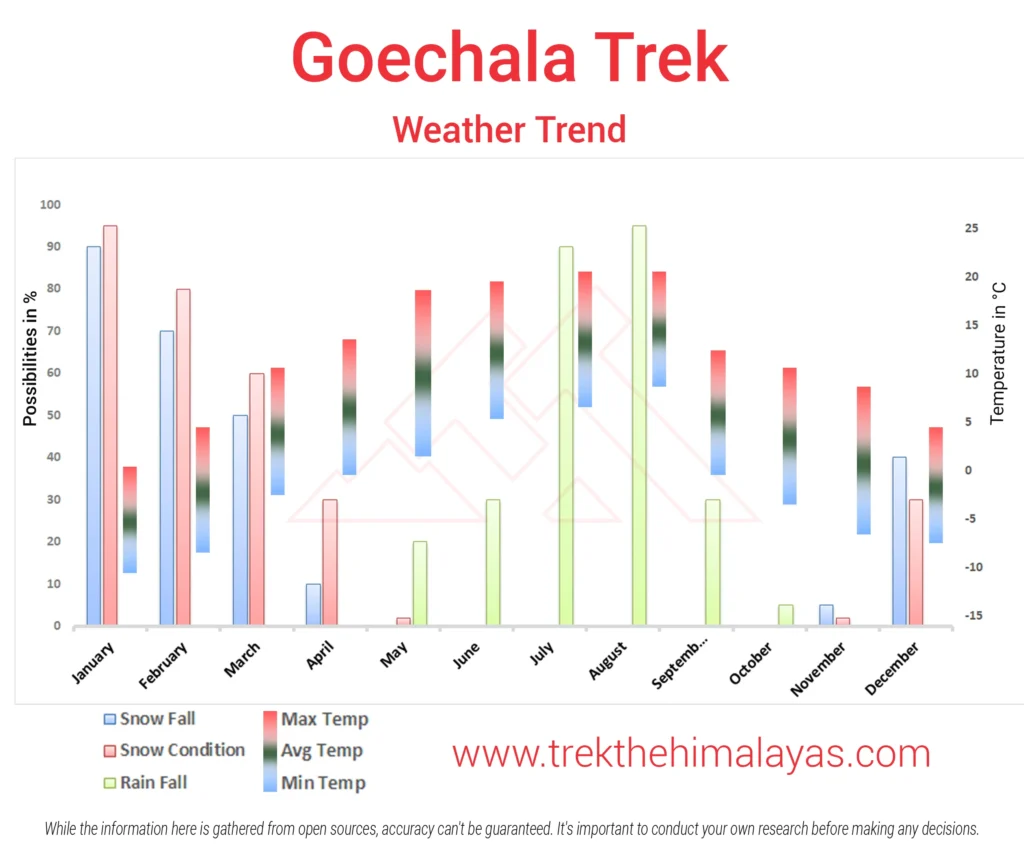
Taking you above 15,000 ft it is one of the highest Himalayan treks and as such you need to prepare your body for all sorts of altitude-related problems, it is best to follow the advice of your trek leader at all times. The overall weather of Sikkim is pretty moist year-round and as you get to higher altitudes, the moisture increases, adding to the natural cold conditions. While on the trails, you can expect the temperature to be at around 8 degrees C to 15 degrees C during daytime of spring/summer and it can dip to 0 to -7 degrees C at night. In autumn and winter, the temperature lingers between 8 to 10 degrees C in daytime, while at night it is around 0 to -10, making the trek even more challenging.
Also, while Sikkim trekking, keep in mind that the weather conditions at such high altitudes are perpetually unstable. A bright sunny day can turn cloudy in the blink of an eye or a gust of wind may come all of a sudden that knocks you off your feet, so always be prepared for unpredictable weather for a safe trekking experience. The trek takes you to a high altitude, and at times, the ascent is quite steep, increasing the chances of AMS. However, with proper acclimatization and the right precautions, you can avoid altitude sickness and fully enjoy the experience.
Why Choose Call9Adventures?
Call 9 Adventures exists at the intersection most luxury operators never reach: white-glove hospitality backed by genuine special forces discipline. Every expedition is built and advised by decorated veterans of India’s special forces, running acclimatization protocols designed for real mountain survival, not just brochure comfort. Where other operators outsource risk to “experienced local guides,” we put career military expedition leaders in charge of your safety at altitude. Each summit is captured by a dedicated cinematography team, turning your expedition into a film-quality record rather than a phone gallery. It’s the same standard of care that protects soldiers on the world’s most unforgiving terrain, now placed entirely in service of your summit.
Goechala Trek Itinerary
Day 1
Day 2
Day 3
Day 4
Day 5
Day 6
Day 7
Day 8
Day 9
Day 10
Day 11
Briefing and team meeting at Mayfair Tea Resort Siliguri.
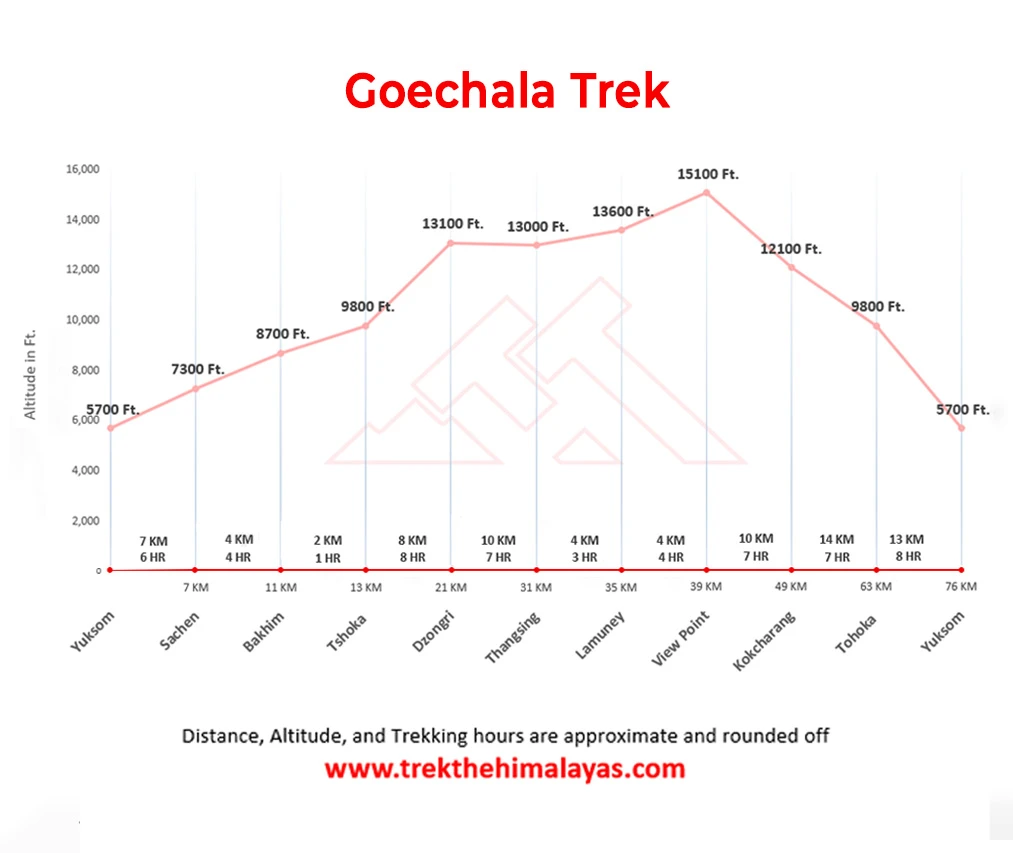
- Altitude Yuksom: 1800 m / 5700 ft
- Drive Distance: 150 km | 8 hrs
- Cloakroom facilities is available at Basecamp Yuksom
Siliguri to Yuksom.
- Altitude (Sachen): 2,200 m / 7,300 ft
- Trek Distance: 7 km | 6 hr approx.
- Leeches: There is a high chance of encountering leeches, so remember to carry salt or spray with you.
Sachen to Tshokha via Bakhim
- Altitude:
- Bakhim: 2,650 m / 8,700 ft
- Tshoka: 3,000 m / 9,800 ft
- Trek Distance: 6 km | 5 hr approx.
Tsokha to Dzongri via Phedang
- Altitude:
- Phedang: 3,700 m / 12,100 ft
- Deorali Top: 4,000 m / 13,100 ft
- Dzongri: 4,000 m / 13,100 ft
- Trek Distance: 8 km | 8 hr approx
Acclimatization Day at Dzongri
- Altitude (Dzongri Top): 4,150 m / 13,700 ft
Dzongri to Thansing via Kokchhurung
- Altitude:
- Kokchhurung: 3,700 m / 12,100 ft
- Thansing: 3,950 m / 13,000 ft
- Trek Distance: 10 km | 7 hr approx
Thansing to Lamuney
- Altitude Lamuney: 4,150 m / 13,600 ft
- Trek Distance: 4 km | 3 hr approx.
Lamuney to Goechala via Samiti Lake back to Thansing/Kokchhurung
- Altitude:
- Samiti Lake: 4,300 m / 14,200 ft
- Goecha La viewpoint 1: 4,600 m / 15,100 ft
- Thansing: 3,950 m / 13,000 ft
- Trek Distance: 14 km | 10-11 hr approx
Thansing/Kokcharang to Tshokha via Phedang
- Altitude:
- Phedang: 3,700 m / 12,100 ft
- Tshoka: 3,000 m / 9,800 ft
- Trek Distance: 14 km | 7 hr approx
Tshokha to Yuksom via Bakhim and Sachen
- Altitude Yuksom: 1,750 m / 5,700 ft
- Trek Distance: 13 km | 8 hr approx
Yuksom to Siliguri . Spend the night enjoying and relaxing at the Mayfair Tea Resort.
- Drive Distance: 150 km | 8 hrs
Briefing and team meeting at Mayfair Tea Resort Siliguri.
- Altitude Yuksom: 1800 m / 5700 ft
- Drive Distance: 150 km | 8 hrs
- Accommodation: Guesthouse
- Cloakroom facilities is available at Basecamp Yuksom
The Goechala trek begins from Yuksom. If you have booked your transportation from NJP to Yuksom with Trek the Himalayas, then the team will pick you from New Jalpaiguri Railway Station at the decided time. You will be driven from NJP to Yuksom, from where you will begin the trek on the following day.
Along your drive from NJP to Yuksom, you will pass through scenic roads and the pristine Teesta River gushing alongside as you drive uphill. On the way, there’s a stunning Teesta River viewpoint, where you can take in the breathtaking sight of the river flowing gracefully below.
While driving, you’ll come across the Melli Checkpost, where you’ll need to show your ID to enter Sikkim. This is the only gate for both entry and exit. Next, you’ll pass through Jorethang, a great spot to stop for lunch and enjoy some delicious Northeastern cuisine. It’s also the last major town with an ATM, so make sure to withdraw enough cash before continuing your journey. After lunch, you will again drive towards Yuksom. Further you would come across Legship, and cross a beautiful bridge on the way. When you reach Yuksom, you will be accommodated in a guest house, where you can rest. Located in West Sikkim, the historic town of Yuksom was once the first capital of Sikkim. Serving as the gateway to Mt. Kanchenjunga, this picturesque town is steeped in history and cultural significance. Here, you can also learn about the religious and cultural fables of Sikkim and get a close look at the traditions and the community life.
Around late evening, the Trek Leader will give you the main briefing about the rules to be followed at the trek, the weather conditions up in the mountains, and all the essentials that you need to carry with you on the trek. After this, you can have dinner and rest.
Siliguri to Yuksom.
- Altitude (Sachen): 2,200 m / 7,300 ft
- Trek Distance: 7 km | 6 hr approx.
- Accommodation: Tents
- Leeches: There is a high chance of encountering leeches, so remember to carry salt or spray with you.
Today marks the first day of trekking of your Goechala trek as you head towards Sachen, your first campsite. Start your morning with a hearty breakfast before setting off on the trek. At the beginning of the trail, you would pass through a few small wooden houses and agricultural farms, which gradually fade away as you leave civilization behind and step into nature. The mobile network becomes unreliable, and you won’t find any shops along the way, so it’s best to be prepared.
The trek begins as you enter the majestic Kanchenjunga National Park through a large welcoming gate. Soon, you’ll reach the Phakhola Bridge, the first of three charming bridges you’ll cross along the way. Each bridge offers a peaceful pause, surrounded by the serene beauty of flowing rivers and dense forest. The trail ascends along the gorge of the Prek Chhu river, weaving through dense forests of Broadleaf, Golden and Silver Oak. As you walk, you’ll also spot vibrant Himalayan wildflowers and delicate orchids blooming along the path. A packed lunch will be provided, which you can enjoy on the way to Sachen.
From the first suspension bridge, the trail is moderate until you reach the second bridge. After that, a steep ascent leads to the third bridge, which marks your final stretch to Sachen. The Sachen campsite is nestled in a small clearing within the dense forest, with the soothing sound of the Prek Chu River flowing further down the valley. If you listen closely, you can hear the gentle gushing of the river from the campsite. After a long day of trekking, exhaustion may set in, so it’s best to get a good night’s rest. Sleeping early will help you recharge and prepare for the adventure that awaits you the next day.
Sachen to Tshokha via Bakhim
- Altitude:
- Bakhim: 2,650 m / 8,700 ft
- Tshoka: 3,000 m / 9,800 ft
- Trek Distance: 6 km | 5 hr approx.
- Accommodation: Tents
On the third day of your trek, you’ll journey from Sachen to Tshokha, passing through the quaint hamlet of Bakhim. Wake up to a magical morning filled with the melodious chorus of Himalayan birds, their songs echoing through the forest like nature’s own symphony. The crisp mountain air and golden sunlight filtering through the trees make the moment unforgettable. After soaking in the peaceful surroundings and enjoying a hearty breakfast, you’ll set off on the trail, energized and ready for the scenic ascent ahead.
Today’s trail leads you through a dense forest with gentle ups and downs, surrounded by the calming sounds of nature. After some trekking, you’ll arrive at the Prek Chu Bridge, a charming spot over a rushing river. From there, the path continues through thick Maple and Oak forests, where the chirping of birds fills the air. If you’re lucky, you might catch a glimpse of the vibrant Yellow-billed Blue Magpie. After the bridge, a steep zigzag ascent begins, eventually bringing you to the peaceful settlement of Bakhim.
Bakhim is a popular rest stop for trekkers, offering stunning views of Yuksom Valley. Here you can refill your water bottles, and can have light snacks. After a short pause, you will continue your ascent towards Tshokha. The stretch from Bakhim to Tshoka is extremely scenic with Magnolia Trees around. These magnolia’s bloom during early spring to late summer, turning the trails even more pretty with pink and white colors.
When you reach Tshoka, you’ll see a few small huts belonging to the forest and tourism department. Tshoka is a beautiful campsite, with snow-covered peaks visible in the distance, including the majestic Mt. Pandim and Tenzing Khang. Not far from the campsite is the Tshoka monastery, which you can visit in the evening. With a lake beside, it’s a quiet, peaceful place, perfect for spending a little time before nightfall. End your day by soaking in the calm surroundings and getting a good rest for the next day’s adventure.
Tsokha to Dzongri via Phedang
- Altitude:
- Phedang: 3,700 m / 12,100 ft
- Deorali Top: 4,000 m / 13,100 ft
- Dzongri: 4,000 m / 13,100 ft
- Trek Distance: 8 km | 8 hr approx
- Accommodation: Tents
It is the fourth day of your journey and you will trek from Tshoka to Dzongri. Start your day by waking up in the serene mountain surroundings of Tshoka. Enjoy a nutritious breakfast and get ready for the day’s trek. Today’s trek is one of the most scenic yet challenging sections of the journey.
The day’s trek begins with a gentle ascent into the forest, where the cool mountain air and the scent of damp earth welcome you. After a while, you’ll encounter a picturesque wooden pathway winding through a dense forest of Rhododendrons. During spring, the trail comes alive with vibrant red and pink blooms, creating a stunning canopy of flowers overhead. The sight of these blossoms makes the stretch feel like a living painting. Walking along this trail is a truly enchanting experience, the wooden planks creaking softly beneath your feet, while the vibrant flowers and stillness of the forest create a dreamlike atmosphere. As you move forward, the path begins to climb more steeply, weaving through thick greenery and tall trees. With every step, the silence of the forest deepens, eventually leading you to the peaceful meadow of Phedang.
Phedang is a beautiful resting point lined with prayer flags. This is a great spot to take a short break before continuing. Carry enough water, as there are no water sources along the way. The altitude gain is significant, increasing the risk of Acute Mountain Sickness. Trek at a steady pace, take regular breaks, and stay hydrated and energized to avoid discomfort. From Phedang, the trees start to thin out, and the trail is really steep and tests your endurance and strength. After trekking for a while, you’ll arrive at Deorali Top, a beautiful viewpoint with wide panoramic views of the Himalayas. On a clear day, you can even spot the mighty Mt. Kanchenjunga and Pandim standing tall among the clouds. It’s a perfect place to pause, catch your breath, and take in the beauty around you.
By the time you reach Deorali Top, you’ll have crossed the toughest part of today’s trek. From there, the trail becomes easier and more gradual. The wind here can be quite strong, and it gets really cold, so make sure to dress warmly. Once you arrive at Dzongri, settle into your campsite, enjoy a hot, comforting dinner, and get some much-needed rest to prepare for the adventures waiting for you the next day.
Acclimatization Day at Dzongri
- Altitude (Dzongri Top): 4,150 m / 13,700 ft
Today is a rest and acclimatization day at Dzongri, but you have the chance to witness a pleasant sunrise from Dzongri Top with a short trek.
The trek starts early in the morning and takes about an hour to reach Dzongri Top. You would reach the Top by the time of sunrise and witness an amazing morning. As the sun rises, you’ll see the majestic Kanchenjunga Peak glowing in the soft morning light. From the top, you can admire stunning Himalayan peaks, including North and South Kabru, Mt. Pandim, Kokthang, Narsing, Kumbhkarna, Jhopuno, Tenzing Khang, Simvo, and Frey Peak. Colorful Tibetan prayer flags flutter in the breeze, adding to the charm of this magical place. Watch as the snow-covered mountains slowly change color as the sun rays hit them. On a clear day, Mt. Kanchenjunga appears golden as the sunlight reflects off its snowy peaks. The view is truly unforgettable.
Take your time at the top, soak in the views, click amazing pictures, and enjoy the peaceful surroundings. After that, head back to the campsite. Since the previous day was quite challenging with a steep altitude gain, your body needs time to adjust. Spend the rest of the day relaxing, enjoying good food, and bonding with fellow trekkers.
It’s best to avoid sleeping during the day. Instead, take short walks around the campsite to stay active and engaged. The stunning landscapes and snow-capped mountains will refresh your mind and body. Capture some beautiful moments, relax, and prepare for the next day’s trek.
Dzongri to Thansing via Kokchhurung
- Altitude:
- Kokchhurung: 3,700 m / 12,100 ft
- Thansing: 3,950 m / 13,000 ft
- Trek Distance: 10 km | 7 hr approx
- Accommodation: Tents
Today is the sixth day of your journey, and you will be trekking from Dzongri to Thansing via Kokchhurung. Start your morning with beautiful views and a wholesome breakfast before setting off on your trek.
The trail takes you through wide, open meadows. Walking through these meadows is a wonderful experience, though it can test your patience at times. Often, clouds roll in and cover the views, but soon the sky clears up again. Watching the landscapes change like this feels like being part of a dream. After walking through the meadows for a while, you’ll enter a high altitude thicket filled with rhododendron trees. As you move through the thicket, you’ll hear the calming sounds of birds singing and leaves rustling in the wind. It’s a peaceful stretch, and you might spot colorful birds. After crossing this section, the trail descends steeply leading you to Kokchhurung. At Kokchhurung, there’s a small trekkers’ hut where many travelers choose to rest while heading back. However, the space in the hut is quite limited, and even finding a good spot to pitch a tent can be tricky. It’s a good idea to take a short break here to rest your legs and refill your water bottles.
From Kokchhurung, the trail heads further toward Thangsing. Further you will come across a bridge. After crossing it, you will again enter into the forest, the trail gently climbs uphill, not too steep or tiring. The sound of the river flowing nearby, mixed with the songs of birds, creates a beautiful, soothing atmosphere for trekking. After crossing the slightly steep section, a vast meadow will appear in front of you, signaling your arrival at the Thangsing campsite.
Nestled at the base of Mt. Tenzing Khang, this site offers stunning close-up views of the majestic Himalayan peaks. On clear days, you’ll catch a glimpse of the Kanchenjunga shoulder and the towering Mt. Pandim in all their glory. Upon reaching the campsite, enjoy a hot lunch and spend the rest of the day relaxing. The temperature at Thangsing can drop significantly, so be sure to layer up for warmth. A light meal is recommended, as heavy food can cause discomfort at higher altitudes. Staying hydrated is also essential to help your body adjust.
As night falls, retreat to your tent and get a good rest in preparation for the journey ahead.
Thansing to Lamuney
- Altitude Lamuney: 4,150 m / 13,600 ft
- Trek Distance: 4 km | 3 hr approx.
- Accommodation: Tents
- Discover the Significance of Lamuney Campsite in the Goechala Trek by Clicking Here
Today, you will trek from Thansing to Lamuney, which is the easiest stretch of the Goechala trek. Since the trek is short and less demanding, you can sleep in a little longer this morning. After enjoying a hearty breakfast, you’ll set off for Lamuney. The trail is mostly flat, making it a relaxed and pleasant walk. In about three hours, you will reach the next campsite. This easy trek allows your body to rest and adjust to the increasing altitude. As you walk through vast meadows and open pastures on both sides, soak in the beauty of the stunning landscapes around you. The trail remains simple and mostly flat.
Once you arrive at Lamuney, settle in and enjoy a warm lunch while enjoying the peaceful mountain views. The campsite is in a wide-open area, offering an amazing sight of the Kanchenjunga. Since it is located near the Prek Chu River, the surroundings are incredibly serene, and you can take short walks around to explore. Later in the evening, your trek leader and guide will brief you about the most important day of the trek, the journey to the Goechala Summit. They will explain the trail, what to expect, and share useful tips for the big day ahead.
As night falls, the sky at Lamuney transforms into a mesmerizing display of stars, making for a mesmerizing sight. Since the next day’s trek starts early in the morning, it is best to sleep early and get proper rest.
Lamuney to Goechala via Samiti Lake back to Thansing/Kokchhurung
- Altitude:
- Samiti Lake: 4,300 m / 14,200 ft
- Goecha La viewpoint 1: 4,600 m / 15,100 ft
- Thansing: 3,950 m / 3,000 ft
- Trek Distance: 14 km | 10-11 hr approx
- Accommodation: Tents
Today is a big and challenging day as you trek from Lamuney to Goechala via Samiti Lake and then return to Thangsing or Kokchhurung. Your journey will begin early in the morning, allowing you to witness a splendid sunrise from the viewpoint. The sight of the first golden rays lighting up the mighty Himalayas is one of the most magical moments of the Goechala trek. To ensure a smooth return, pack your bags the night before so that after the trek, you can have lunch and head to the lower campsites without delay.
The trek starts with an uphill climb over rocky moraines, followed by a gradual walk leading to Samiti Lake. While trekking up, it will still be dark, so you won’t fully see the lake’s beauty yet, but you can take your time to admire it on the way back. From Samiti Lake, the path ascends again, leading you to the Goechala Viewpoint. The trail to the ridge from the lake is narrow, so walk carefully. By the time you reach the viewpoint, the sun will just be rising. Most of this trek will take place during the night, so be sure to carry your head torch for proper visibility.
Reaching the viewpoint at sunrise is an unforgettable experience. Before you stand the majestic Mt. Kanchenjunga, along with other towering Himalayan peaks covered in pristine snow. You will spot prominent peaks like Pandim, Kanchenjunga, Tenzing Thang. As the golden morning light touches Kanchenjunga, it feels almost surreal, like a dream brought to life. The Himalayan peaks appear incredibly close, their vastness filling you with awe. The stunning sunrise, combined with the joy of reaching this point, makes all your efforts worthwhile. This is one of the most rewarding moments of the trek, leaving you speechless with its beauty.
After spending time soaking in the incredible views, you will begin your descent towards Lamuney. On the way back, you will stop by the serene Samiti Lake. Nestled among rugged terrains, the lake’s crystal-clear waters reflect the surrounding peaks, creating a picture-perfect scene. You can take a peaceful walk around the lake, capture beautiful photos and videos, and simply sit by the shore, listening to the gentle sounds of water. After taking in the beauty of the lake, you will continue trekking back to Lamuney, where an early hot lunch awaits. Depending on the weather, you will then trek further down to either Thangsing or Kokchhurung.
Once you reach your final campsite for the day, you can settle into your tent and get a well-deserved rest after this incredible adventure.
Thansing/Kokcharang to Tshokha via Phedang
- Altitude:
- Phedang: 3,700 m / 12,100 ft
- Tshoka: 3,000 m / 9,800 ft
- Trek Distance: 14 km | 7 hr approx
- Accommodation: Tents
Today, you will trek back to Tshoka. Wake up at the beautiful campsite, enjoy a hearty breakfast, and get ready for the trek ahead.
The journey back starts early, so you can reach Tshoka before it gets dark.
Today you will take a different path rather than retracing your path through the same route. From Kokchorrung there is a hidden path into the forest. The trails through the forest are defined and so thin that only one person can walk at a time. Today’s trek is a mix of gentle climbs and easy descents through thick, green forests. This forest is filled with different kinds of trees, including rhododendrons. If you visit during spring, the trail looks extra beautiful with bright rhododendron flowers blooming all around, adding a splash of color to your walk.
Remember to follow the trekking tips your trek leaders have shared, and be careful with your steps, especially while going downhill. The path can get a little slippery in places, so it’s best to move steadily and enjoy the peaceful forest around you. The trail is quite direct without any diversion, meaning you will walk through dense forests for long stretches. The forest opens up only at Phedang, which is the first stop on your way down, and takes about 4 to 5 hours to reach. A packed lunch will be provided for you, and once you arrive at Phedang, you will take a short break to rest and enjoy your meal. The cool breeze and soothing sounds of nature will refresh you, helping you regain energy for the next stretch of the trek.
After resting, you will continue your descent toward Tshoka, following the same route you took earlier. The path winds through thick Rhododendron forests, offering vibrant scenery that makes the walk enjoyable. The descent from here is much gentler, making it a pleasant trek. Upon arriving at Tshoka, you will settle into your campsite for the night. Since tomorrow is another long trek back, it’s best to sleep early and get plenty of rest.
Tshokha to Yuksom via Bakhim and Sachen
- Altitude Yuksom: 1,750 m / 5,700 ft
- Trek Distance: 13 km | 8 hr approx
- Accommodation: Guest House
Today, you will make your way back to Yuksom, passing through Prek Chu River, Bakhim, and Sachen.
Your day will start early, as you have a long distance to cover. Enjoy a hearty breakfast in the mountains before setting off on the trail. You will follow the same scenic route you took while trekking from Yuksom to Tshoka. The path is mostly gentle, with a serene and quiet environment, making the journey more enjoyable. On your way down, you will cross the three picturesque iron bridges again and pass through Bakhim and Sachen. Since the trek is mostly downhill, it can put some strain on your knees, so take it slow and maintain a steady pace.
The final stretch includes a short uphill climb before you reach Yuksom. Though it may feel a bit tiring, it’s only for a few meters. Once you cross this, you will find yourself back in the familiar surroundings of Yuksom. Telecom networks will return, allowing you to connect with friends and family. For those eager to explore, Yuksom has much to offer. You can stroll around, learn about its rich history, and experience the local culture. The people here are warm and welcoming, making every interaction enjoyable. Visit the monasteries, browse through the local handicraft market, or pick up souvenirs as a memory of this incredible trek. Finally, settle into your guest house, enjoy a wholesome meal, and get some well-deserved rest.
Yuksom to Siliguri . Spend the night enjoying and relaxing at the Mayfair Tea Resort.
- Drive Distance: 150 km | 8 hrs
Today is the last day of your journey in the peaceful mountains, and it’s time to head back from Yuksom to NJP. You’ll start early since it’s a long drive ahead. The distance is about 150 km and can take 7 to 8 hours, depending on traffic. You’ll reach NJP by late evening. The road back follows the same beautiful route, with the Teesta River flowing alongside. As you drive, take a moment to think about the wonderful memories you made in the mountains and enjoy good conversations with your fellow trekkers.
Once you reach NJP, you can continue your journey further or stay overnight. If time allows, explore the local Hong Kong and Bidhan markets, shop for handicrafts, and try some delicious local food. When the time comes, move ahead on the next part of your journey.
Eligiblity for Goechala Trek
- Age Requirement:
- Minimum 16 years
- The Trekker should have sufficient stamina to cover 5 km of distance in 30 minutes without stress or 10 km of distance by jogging in 70 minutes without stress.
- If the trekker prefers cycling he/ she should be able to cycle 20 km of distance in 55 minutes.
- Fitness Criteria:
- Experience of at least two high-altitude treks (above 4000 m) is preferred. Trekkers should have a good level of fitness.
- If the trekker wants to carry a backpack then he/she should be able to carry a 10-12 kg backpack. If opt Off-load option then the Trekker should be able to carry 3-5 kg backpack.
- If a trekker’s BMI is more or less than the normal range (18-26), please consult our Trek Coordinator before booking.
- Pulse rate at rest must be in between (60 to 100 beats per minute).
- Blood Pressure Reading must be in between (DIASTOLIC 75 – 85, SYSTOLIC 100 - 130 mm Hg).
- Respiratory rate at rest must be in between (12 to 20 breaths per minute).
- Should not have Liver and kidney issues.
- Should not have Diabetes Mellitus, Bronchial Asthma, Heart problems, Hypertension, etc.
- No pacemaker implant.
- People with Sinus issues, Epilepsy please contact to trek coordinator before booking the trek.
- If your BMI is not normal, Please contact our Trek coordinator before Trek booking.
Goechala Trek Cost Terms – Inclusions & Exclusions
Inclusion
1. Accommodation (as per the itinerary):
- Day 1 and Day 11 in a 5 star hotel in Siliguri on triple/quad/penta sharing. (Male and female accommodated separately)
- Day 2 to Day 8 in a Tent (No Sharing).
2. Meals (Veg + Egg):
- Vegetarian sports nutrition, engineered for altitude. No meat, no eggs — just precision-fueled meals, served white-glove at every camp.
3. Support:
- 1 Versatile base camp manager handles communication and deploys extra manpower in emergencies.
- 1 Mountaineering & First aid qualified professional trek Leader.
- 1 Experienced high-altitude chef.
- Local experienced guides (Number of guides depending on the group size).
- Enough support staff.
4. Trek equipment:
- Sleeping bag, Sleeping liners (if required), mattresses, and Utensils.
- 3 men all season trekker tent, Kitchen & Dining tent, Toilet tent.
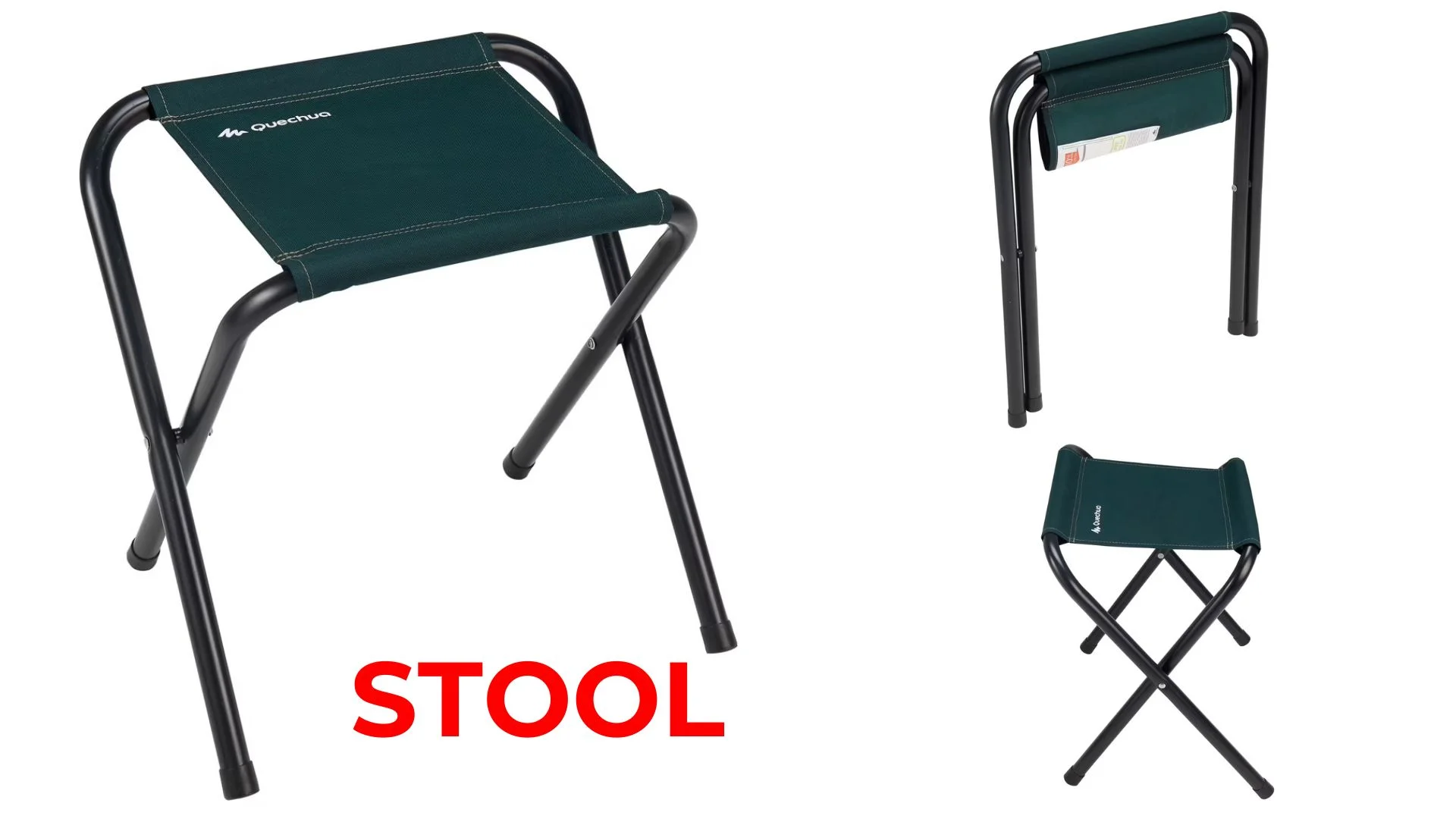
- Camping stool, Walkie talkie.
- Ropes, Helmet, Ice axe, Harness, Gaiters & microspikes (if required).
5. First aid:
- Medical kit, Stretcher, Oxygen cylinder, Blood pressure monitor, Oximeter, Stethoscope.
6. Transportation (as per the itinerary):
- Transport from Siliguri to Yuksom and return.
7. Mules/porters to carry the central luggage.
8. Cloakroom facility available at the base camp for additional luggage.
9. All necessary permits and entry fees, up to the amount charged for Indians.
10. Services from Yuksom to Yuksom.
11. Trek Completion Certificate.
Exclusion
- Insurance (For non-Indian Nationals, NRI or OCI card holders).
- Food during the transit.
- Any kind of personal expenses.
- Mule or porter to carry personal luggage.
- Emergency evacuation, hospitalization charge, etc.
- Any extra costs incurred due to extension/change of the itinerary due to natural calamities roadblocks, vehicle breakdown, etc. factors beyond our control
- Anything not specifically mentioned under the head Inclusion.
Things can be provided on demand and availability (participant has to pay extra for these things).
1- Gamow/PAC HAPO Bag (Portable Hyperbaric Bag) – is a unique, portable hyperbaric chamber for the treatment of acute mountain sickness (AMS), also known as altitude sickness.
2- AEDs (Automated External Defibrillators) – are portable life-saving devices designed to treat people experiencing sudden cardiac arrest, a medical condition in which the heart stops beating suddenly and unexpectedly.
Goechala Trek Cost Terms – Inclusions & Exclusions
Inclusion
1. Accommodation (as per the itinerary):
- Day 1 and Day 11 in a 5 star hotel in Siliguri on triple/quad/penta sharing. (Male and female accommodated separately)
- Day 2 to Day 8 in a Tent (No Sharing).
2. Meals (Veg + Egg):
- Vegetarian sports nutrition, engineered for altitude. No meat, no eggs — just precision-fueled meals, served white-glove at every camp.
3. Support:
- 1 Versatile base camp manager handles communication and deploys extra manpower in emergencies.
- 1 Mountaineering & First aid qualified professional trek Leader.
- 1 Experienced high-altitude chef.
- Local experienced guides (Number of guides depending on the group size).
- Enough support staff.
4. Trek equipment:
- Sleeping bag, Sleeping liners (if required), mattresses, and Utensils.
- 3 men all season trekker tent, Kitchen & Dining tent, Toilet tent.
- Camping stool, Walkie talkie.
- Ropes, Helmet, Ice axe, Harness, Gaiters & microspikes (if required).
5. First aid:
- Medical kit, Stretcher, Oxygen cylinder, Blood pressure monitor, Oximeter, Stethoscope.
6. Transportation (as per the itinerary):
- Transport from Siliguri to Yuksom and return.
7. Mules/porters to carry the central luggage.
8. Cloakroom facility available at the base camp for additional luggage.
9. All necessary permits and entry fees, up to the amount charged for Indians.
10. Services from Yuksom to Yuksom.
11. Trek Completion Certificate.
Exclusion
- Insurance (For non-Indian Nationals, NRI or OCI card holders).
- Food during the transit.
- Any kind of personal expenses.
- Mule or porter to carry personal luggage.
- Emergency evacuation, hospitalization charge, etc.
- Any extra costs incurred due to extension/change of the itinerary due to natural calamities roadblocks, vehicle breakdown, etc. factors beyond our control
- Anything not specifically mentioned under the head Inclusion.
Things can be provided on demand and availability (participant has to pay extra for these things).
1- Gamow/PAC HAPO Bag (Portable Hyperbaric Bag) – is a unique, portable hyperbaric chamber for the treatment of acute mountain sickness (AMS), also known as altitude sickness.
2- AEDs (Automated External Defibrillators) – are portable life-saving devices designed to treat people experiencing sudden cardiac arrest, a medical condition in which the heart stops beating suddenly and unexpectedly.
Goechala Trek Essentials – Complete Packing List
| Item | Requirement / Details |
|---|---|
| 🎒 Backpack with Rain Cover | 50–60 Ltr capacity with comfortable shoulder straps |
| 🎒 Day Pack with Rain Cover | 20–30 Ltr capacity (if off-loading is opted) |
| 🦯 Walking Stick | Advisable — carry at least one |
| 💧 Water Bottle / Hydration Pack | Carry 2 bottles of 1 litre each. If using a hydration pack, carry 1 hydration pack + 1 bottle of 1 litre. Also carry at least one thermos flask. |
| 🍱 Small Tiffin / Lunch Box | 1 No. |
| 🍫 Snacks | Energy bars, dry fruits, Electral/ORS, etc. |
| 🩹 Personal Medical Kit | Carry necessary personal medicines after consulting your doctor. |
| Item | Requirement / Details |
|---|---|
| 👕 T-Shirt (Synthetic Quick-Dry) | 1 Full-Sleeve + 2 Half-Sleeve |
| 🧥 Fleece T-Shirt | 1 No. |
| 🧥 Fleece Jacket | 1 No. |
| 🌬️ Windproof Jacket | 1 No. |
| ❄️ Down Feather / Hollow Jacket | 1 No. |
| 🔥 Thermal Inner (Upper & Lower) | 1 Pair |
| 👖 Trek Pant (Synthetic Quick-Dry) | 2 Nos. |
| 👖 Fleece Pant | 1 No. |
| 🧤 Waterproof Gloves | 1 Pair |
| 🧤 Fleece / Woollen Gloves | 1 Pair |
| 🌧️ Poncho / Waterproof Jacket & Pant | 1 Set |
| Item | Requirement / Details |
|---|---|
| 🔦 Head Torch | 1 No. (Avoid carrying a hand torch) |
| 🧢 Sun Cap | 1 No. |
| 🧶 Woollen Cap | 1 No. |
| 🥷 Balaclava | 1 No. |
| 🧣 Buff / Neck Gaiter | 1 Synthetic + 1 Woollen |
| 🕶️ Sunglasses | UV-protected sunglasses with dark side covers. For people who wear spectacles: (A) Use contact lenses, or (B) use photochromic glasses. |
| Item | Requirement / Details |
|---|---|
| 🥾 Trekking Shoes | 1 Pair – Water-resistant, high-ankle, and with good grip |
| 🩴 Floaters / Flip-Flops | 1 Pair |
| 🧦 Cotton Socks | 6 Pairs |
| 🧦 Woollen Socks | 1 Pair |
| 🦵 Gaiters | 1 Pair (Provided by TTH when required) |
| ❄️ Micro Spikes | 1 Pair (Provided by TTH when required) |
| Item | Requirement / Details |
|---|---|
| 🧴 Sunscreen | 1 No. |
| 🧴 Moisturiser | 1 No. |
| 💄 Chapstick / Lip Balm | 1 No. |
| 🪥 Toothbrush & Toothpaste | 1 Set |
| 🧻 Toilet Paper & Wipes | 1 Pack |
| 🧼 Soap / Hand Sanitizer | 1 No. |
| 🧴 Antibacterial Powder | 1 No. |
| 🧖 Quick-Dry Towel | 1 No. |

Cancellation Terms
To request a cancellation, please email us at info@call9adventures.com using your registered email ID.
Cancellations prior to 25 days from the start of the Trip.
Refund Options
- 5% deduction of trek fee
- 100% trek fee cash voucher for any trip till one year
- Transfer your trek (any trek, any date) to your friend
Cancellation between 14 days and 10 days to the start of the Trip
Refund Options
- 50% deduction of trek fee
- 80% trek fee cash voucher for same trip till one year
- 70% trek fee cash voucher for any trip till one year
- Book the same trek, in the same season, with any other batch
- Transfer your trek (same trek, any date) to your friend
Cancellation less than 9 days to the start of the trek.
Refund Options
- No cash refund
- 20% trek fee cash voucher for the same trip till one year
- 10% trek fee cash voucher for any trip till one year
- Transfer your trek (same trek, same date) to your friend
- To reschedule a trek (same trek only), a 30 % rescheduling fee of the trek cost will apply.
Cancellation Policy (Emergency Cases):
In case of a death in the immediate family (parents, siblings, spouse, children) or if the trekker is hospitalized (min. 48 hours) or suffers a fracture (leg/arm) within a week before the trek, even if canceled a day before:
90% trek fee refund in cash & 10% as a voucher (valid for 1 year, for any India trek).
Valid documents required. We’re here to support you during tough times.
Note:
- Change of trek batch is dependent on the availability of seats in the batch
- In case of transferring a trek to a friend, he/she should satisfy all the mandatory requirements put forward by Call9Adventures
- Call9Adventures holds the right to change/cancel the policies, without prior notice
Booking and Payments
- The Participant is responsible for verifying the accuracy of all details, including Trip dates and personal documentation, at the time of booking.
- Payments must be made in accordance with the timelines and instructions provided by Call9Adventures. Late payments may result in cancellation of booking without refund.
- In the event of a cash refund, only the portion of the payment made in cash shall be eligible for refund in cash. Any booking made using voucher, discounts, promotional codes, or through any non-cash mode of payment shall not be eligible for a cash refund under any circumstances.
- Refunds, if applicable, shall be processed within 15–30 working days of confirmation.
- All add-on bookings are subject to the respective add-on cancellation policy, and refunds will be processed accordingly.
- Voucher Terms
- This is a non-transferable voucher
- This voucher cannot be combined with any other offer or promotion from Call9Adventures.
- This voucher is valid for treks booked directly with Call9Adventures in India.
- To avail the voucher please use your register phone number or e-mail id
- All other terms and conditions applicable to booking a trek with Trek are also applicable to this voucher.
Itinerary and Modifications
- Call9Adventures reserves the right to modify, shorten, or cancel any part of the Trip due to transportation delays, weather, health emergencies, or other unforeseen circumstances including Force Majeure.
Cancellations and Refunds
- No refunds or vouchers, partial or otherwise, shall be provided for voluntary withdrawal, non-utilisation of services, or removal from the Trip.
- If Call9Adventures cancels the Trip before arrival at the designated pick-up point due to unforeseen circumstances or Force Majeure, the Participant may choose from:
- An alternate Trip/date.
- A credit voucher valid for one (1) year.
- Transfer to another Trip, with cost differences payable by the Participant.
- If the Trip is abandoned post-arrival at the designated pick-up point, no cash refund or voucher shall be issued. The Trek Again Policy may apply at Call9Adventure’s discretion.
- Call9Adventures shall not be liable for any associated travel costs such as flights, accommodation, or visa fees.
Force Majeure
- Events beyond its control including but not limited to earthquakes, landslides, strikes, curfews, war, pandemic, government restrictions, heavy rainfall or snowfall, windstorms, road blockages, trail disruption, or withdrawal of permits, Call9Adventures shall not be held liable for any cancellation, delay, or service modification caused by Force Majeure.
Government employees can avail the benefit of Special Casual Leave (SCL) when they join us for a trekking expedition. As per Pay Commission guidelines, up to 30 days of Special Casual Leave can be availed in a calendar year for trekking or mountaineering expeditions conducted through a registered organisation.
Trek The Himalayas is a registered adventure tour operator with the Indian Mountaineering Foundation (IMF) and the Ministry of Tourism (MoT), making your trek eligible for SCL benefits.
To apply, email us at info@call9adventures.com at least 30 days before the trek departure date, with the following details:
- Trek name and trek date
- Booking details
- Full name
- Designation
- Department and department address
This benefit is exclusive to Indian Government employees and is applicable only for treks within India.
- Junior trekkers (below 15 years) should have a company of parents/guardians.
- Trekkers between 15 to 18 years can come solo with the disclaimer form signed by parent/guardian.
- Medical & Disclaimer Form (Mandatory Documents)
Mandatory Documents to Bring on A Trek
Goechala Trek Frequently Asked Questions (FAQ)
To do the Goechala Trek, you need a Sikkim Inner Line Permit, which is mandatory for all trekkers. If you are a foreign national, you will also need a Restricted Area Permit.
For the Goechala Trek, pack warm clothing, sturdy trekking shoes, trekking poles, a first-aid kit, and personal toiletries. Also, bring along snacks and energy bars to keep your energy levels up during the trek.
Yes, the Goechala Trek has a risk of altitude mountain sickness (AMS) due to its high elevations. The trek involves long trekking hours, often taking you to altitudes above 15,000 feet, where the air gets thinner, and oxygen levels drop. To minimize the risk of AMS, it is crucial to acclimatize properly, which is why the itinerary includes acclimatization days. Staying well-hydrated, maintaining a steady pace, and listening to your body are also key to staying safe and healthy on this challenging trek. If you experience symptoms like headache, nausea, or dizziness, inform your trek leader immediately to avoid serious health risks.
Yes, a pair of trekking sticks is highly recommended for this long and challenging trek. You can rent trekking sticks from the Trek the Himalayas rental store for extra support and stability on the trail.
For the Goecha La trek, it’s essential to dress in layers. Wear moisture-wicking base layers, followed by insulating layers like fleece or down jackets, 2-3 trek pants, 4-5 pair socks, warm gloves, sun cap, hat, fleece cap, and thermal inners. Don’t forget to bring thermal innerwear, a hat, gloves, and a scarf or buff to protect against the cold.Improvise, use simple and similar words.
The best treks to do in Sikkim are Bajre Dara and Goechala.
Goechala trek is one of the most famous and very safe treks. It is always recommended to do this trek with an experienced organization. In this trek, the biggest challenge is altitude, for which proper guidance is necessary. Acclimation and hydration are very important. In the Himalayas, weather can be unpredictable too, but with trained leaders, medical kits, and oxygen cylinders carried on the trek, safety is well taken care of.
During the trek, accommodation is mainly in tents set up at campsites. On the first and last day at Yuksom, trekkers stay in guesthouses. Campsites are set up in scenic locations like Tshoka, Dzongri, and Thansing. In these locations, you will experience the raw beauty of Sikkim.
The trek itself is very beautiful, and staying overnight in its beauty gives all the feel of nature, happiness of camping and adventure.
The trek takes 11 days, and the itinerary includes:
- Day 1: Arrival at Yuksom
- Day 2: Yuksom to Sachen
- Day 3: Sachen to Tshoka via Bakhim
- Day 4: Tshoka to Dzongri via Phedang
- Day 5: Acclimatization Day at Dzongri
- Day 6: Dzongri to Thansing via Kokchhurung
- Day 7: Thansing to Lamuney
- Day 8: Lamuney to Goechala via Samiti Lake back to Thansing/Kokchhurung
- Day 9: Thansing/Kokcharang to Tshokha via Phedang
- Day 10: Tshokha to Yuksom via Bakhim and Sachen
- Day 11: Drive from Yuksom to NJP
Yes, here are a few convenient options located within walking distance of NJP Railway Station:
- Tirupati Lodge NJP – Just 200 meters away (approx. 4-minute walk).
- Prince Lodge NJP – A budget-friendly option very close to the station.
- Radha Rani Lodge – Located about a 6-minute walk from the station.
- Hotel Golden Dragon – Another good option, only 6 minutes walking distance from the station.
All these properties are suitable for short stays and provide quick access to the railway station for onward journeys.
Why is Goechala a Must-Do Trek ?
- The Goechala trek gives you the best views of the mighty Kanchenjunga, third highest peak in the world, glowing beautifully in golden hues at sunrise.
- Along with Kanchenjunga, marvel at the stunning panorama of other high Himalayan peaks, including Pandim, Rathong, Goecha, Japuno and Kabru, forming a beautiful skyline.
- The trek passes through the Kanchenjunga National park, a UNESCO world Heritage, and home to exotic wildlife including the Red pandas, Blue Sheep, Himalayan tahr and many more.
- Enjoy the beauty of Samiti Lake, a pristine alpine lake reflecting the towering peaks. Samiti Lake is a sacred and picture-perfect stop that adds to the trek’s charm.
- Trek through lush forests that come alive in spring with vibrant pink, purple, white and red rhododendrons, creating a fairytale-like setting.
- Experience the thrill of crossing hanging bridges over deep valleys and rushing rivers, adding an adventurous and cinematic touch to your journey.
- It is a less crowded trek that takes you through charming Sikkimese villages, where you can experience warm hospitality, traditional food, and visit Buddhist monasteries.
- The picturesque landscapes and a closer view of the vast towering peaks makes this trek a dream destination for every photography enthusiast.
Goecha La Trek – A Gem Among Sikkim Treks
The Goechala trek in Sikkim is counted as one of the most scenic Sikkim treks. The trek takes you closest to the Kanchenjunga, the third highest peak in the world. The trek begins in Yuksom, taking you through amazing and scenic landscapes, it gets you back into Yuksom. Covering a distance of around 90 km, the trek usually takes about 11 days, making it a perfect challenge for those seeking both beauty and endurance. During the trek you can enjoy the stunning views of Mount Kanchenjunga, and a few other grand peaks of the Himalayas.
As you ascend through dense rhododendron forests, charming meadows, and rugged mountain trails, the journey unfolds like a magical story. The trek passes through Sachen, Tshoka, Dzongri, Thansing, Lamuney, and Samiti Lake, finally reaching the Goechala Viewpoint, where the sight of the mighty Kanchenjunga bathed in golden sunlight is nothing short of beauty. With a difficult grade, this trek demands good fitness and determination, while treating you with the best views, making every step worth it. What makes Goechala truly unique is its raw beauty, the peaceful solitude of the trails, the ever-changing landscapes, and the thrill of witnessing some of the world’s highest peaks up close.
Major Attractions of the Goecha La Trek
- Dense Alpine Jungles: The trek takes you through dense forests filled with a variety of trees giving you the best experience of trekking in Sikkim. At lower altitudes, you’ll mainly see oak, maple, and chestnut trees, while higher up, pine, fir, and juniper take over. The trail is also lined with beautiful flowering trees like rhododendrons, orchids, and magnolias, which bloom fully in spring, adding vibrant colors to the landscape. With an abundance of Rhododendrons, it is counted as one of the best Rhododendron treks. Few treks offer such rich greenery at such high altitudes, making this journey even more special.
- Prek Chu Bridge: Throughout the trek, you will come across many stunning suspension bridges, but one that truly stands out is the Prek Chu Bridge. This long and beautiful bridge stretches over the Prek Chu River, which flows through a deep gorge. As you walk across, you would surely pause, turn around, and take in the rare and mesmerizing view of the rushing water below.
- Tshoka Monastery: On your Goechala trek, you’ll come across a beautiful monastery near the Tshoka campsite. Nestled beside a still pond, the Tshoka Monastery looks even more serene and picturesque. To reach it, you’ll follow a trail leading out of the campsite and cross a wooden bridge. Finding a peaceful monastery in the middle of such a trek feels like discovering a hidden gem.
- Samiti Lake: One of the most scenic spots on the trek is the serene Samiti Lake, a stunning blue lake tucked among rugged mountains. Its calm and still waters, with the majestic Mt. Pandim in the backdrop creates mesmerizing scenery. In the early hours, the reflection of Mt. Pandim on the lake’s surface is a sight to behold.
- Sunrise on the Kanchenjunga Range The best part of the trek is watching the mountain peaks glow in the soft morning light. You can witness breathtaking sunrises from two stunning spots, Dzongri Top and Viewpoint 1. At Dzongri Top, you’ll see the Kanchenjunga range slowly change colors as the sun rises, while at Viewpoint 1, the peaks appear even closer and grander, offering a wider, more spectacular morning view. As the sun rises, the towering mountains shift through different shades, and the sky gradually brightens, creating a truly magical experience.
- Kanchenjunga National Park: Since the Goechala trek takes you through the Kanchenjunga National Park, you can spot a wide variety of flora and fauna. The area features dense forests and is home to a significant number of rare and threatened plants and animals. Few animals you could spot here are Jackal, Red Panda, Goral, Blue Sheep, Himalayan Tahr, and Musk Deer.
- Rich Culture: The colorful and lively culture of Sikkim is something you’ll surely enjoy. As you pass through Yuksom and stay in a guesthouse, you’ll get a glimpse of their authentic way of life. You can also chat with the locals during the trek, they are warm, soft-spoken, and happy to share stories about their daily lives.
What to Expect During the Goechala Trek?
During the Goecha La trek, you can expect amazing views, a variety of terrains and landscapes. The trek takes you through dense forests, mountain bridges, monasteries and rhododendron forests. Goechala Trek is situated very close to Mt. Kanchenjunga so you can witness the towering peak from a very close distance and it is not just Kanchenjunga that you get to witness but a lot of other prominent peaks too. When you stand at the Goechala viewpoint, you will be surrounded by Mount Pandim, Jopuno, Kabru, Rathong, Kokthang, Narsing, Simvo, Goecha peak and many more peaks. So, you can expect a stunning view of grand Himalayan peaks.
Taking you above 15,000 ft it is one of the highest Himalayan treks and as such you need to prepare your body for all sorts of altitude-related problems, it is best to follow the advice of your trek leader at all times. The overall weather of Sikkim is pretty moist year-round and as you get to higher altitudes, the moisture increases, adding to the natural cold conditions. While on the trails, you can expect the temperature to be at around 8 degrees C to 15 degrees C during daytime of spring/summer and it can dip to 0 to -7 degrees C at night. In autumn and winter, the temperature lingers between 8 to 10 degrees C in daytime, while at night it is around 0 to -10, making the trek even more challenging.
Also, while Sikkim trekking, keep in mind that the weather conditions at such high altitudes are perpetually unstable. A bright sunny day can turn cloudy in the blink of an eye or a gust of wind may come all of a sudden that knocks you off your feet, so always be prepared for unpredictable weather for a safe trekking experience. The trek takes you to a high altitude, and at times, the ascent is quite steep, increasing the chances of AMS. However, with proper acclimatization and the right precautions, you can avoid altitude sickness and fully enjoy the experience.
Why Choose Call9Adventures?
Call 9 Adventures exists at the intersection most luxury operators never reach: white-glove hospitality backed by genuine special forces discipline. Every expedition is built and advised by decorated veterans of India’s special forces, running acclimatization protocols designed for real mountain survival, not just brochure comfort. Where other operators outsource risk to “experienced local guides,” we put career military expedition leaders in charge of your safety at altitude. Each summit is captured by a dedicated cinematography team, turning your expedition into a film-quality record rather than a phone gallery. It’s the same standard of care that protects soldiers on the world’s most unforgiving terrain, now placed entirely in service of your summit.
Goechala Trek Itinerary
Day 1
Day 2
Day 3
Day 4
Day 5
Day 6
Day 7
Day 8
Day 9
Day 10
Day 11
Briefing and team meeting at Mayfair Tea Resort Siliguri.
- Altitude Yuksom: 1800 m / 5700 ft
- Drive Distance: 150 km | 8 hrs
- Cloakroom facilities is available at Basecamp Yuksom
Siliguri to Yuksom.
- Altitude (Sachen): 2,200 m / 7,300 ft
- Trek Distance: 7 km | 6 hr approx.
- Leeches: There is a high chance of encountering leeches, so remember to carry salt or spray with you.
Sachen to Tshokha via Bakhim
- Altitude:
- Bakhim: 2,650 m / 8,700 ft
- Tshoka: 3,000 m / 9,800 ft
- Trek Distance: 6 km | 5 hr approx.
Tsokha to Dzongri via Phedang
- Altitude:
- Phedang: 3,700 m / 12,100 ft
- Deorali Top: 4,000 m / 13,100 ft
- Dzongri: 4,000 m / 13,100 ft
- Trek Distance: 8 km | 8 hr approx
Acclimatization Day at Dzongri
- Altitude (Dzongri Top): 4,150 m / 13,700 ft
Dzongri to Thansing via Kokchhurung
- Altitude:
- Kokchhurung: 3,700 m / 12,100 ft
- Thansing: 3,950 m / 13,000 ft
- Trek Distance: 10 km | 7 hr approx
Thansing to Lamuney
- Altitude Lamuney: 4,150 m / 13,600 ft
- Trek Distance: 4 km | 3 hr approx.
Lamuney to Goechala via Samiti Lake back to Thansing/Kokchhurung
- Altitude:
- Samiti Lake: 4,300 m / 14,200 ft
- Goecha La viewpoint 1: 4,600 m / 15,100 ft
- Thansing: 3,950 m / 13,000 ft
- Trek Distance: 14 km | 10-11 hr approx
Thansing/Kokcharang to Tshokha via Phedang
- Altitude:
- Phedang: 3,700 m / 12,100 ft
- Tshoka: 3,000 m / 9,800 ft
- Trek Distance: 14 km | 7 hr approx
Tshokha to Yuksom via Bakhim and Sachen
- Altitude Yuksom: 1,750 m / 5,700 ft
- Trek Distance: 13 km | 8 hr approx
Yuksom to Siliguri . Spend the night enjoying and relaxing at the Mayfair Tea Resort.
- Drive Distance: 150 km | 8 hrs
Briefing and team meeting at Mayfair Tea Resort Siliguri.
- Altitude Yuksom: 1800 m / 5700 ft
- Drive Distance: 150 km | 8 hrs
- Accommodation: Guesthouse
- Cloakroom facilities is available at Basecamp Yuksom
The Goechala trek begins from Yuksom. If you have booked your transportation from NJP to Yuksom with Trek the Himalayas, then the team will pick you from New Jalpaiguri Railway Station at the decided time. You will be driven from NJP to Yuksom, from where you will begin the trek on the following day.
Along your drive from NJP to Yuksom, you will pass through scenic roads and the pristine Teesta River gushing alongside as you drive uphill. On the way, there’s a stunning Teesta River viewpoint, where you can take in the breathtaking sight of the river flowing gracefully below.
While driving, you’ll come across the Melli Checkpost, where you’ll need to show your ID to enter Sikkim. This is the only gate for both entry and exit. Next, you’ll pass through Jorethang, a great spot to stop for lunch and enjoy some delicious Northeastern cuisine. It’s also the last major town with an ATM, so make sure to withdraw enough cash before continuing your journey. After lunch, you will again drive towards Yuksom. Further you would come across Legship, and cross a beautiful bridge on the way. When you reach Yuksom, you will be accommodated in a guest house, where you can rest. Located in West Sikkim, the historic town of Yuksom was once the first capital of Sikkim. Serving as the gateway to Mt. Kanchenjunga, this picturesque town is steeped in history and cultural significance. Here, you can also learn about the religious and cultural fables of Sikkim and get a close look at the traditions and the community life.
Around late evening, the Trek Leader will give you the main briefing about the rules to be followed at the trek, the weather conditions up in the mountains, and all the essentials that you need to carry with you on the trek. After this, you can have dinner and rest.
Siliguri to Yuksom.
- Altitude (Sachen): 2,200 m / 7,300 ft
- Trek Distance: 7 km | 6 hr approx.
- Accommodation: Tents
- Leeches: There is a high chance of encountering leeches, so remember to carry salt or spray with you.
Today marks the first day of trekking of your Goechala trek as you head towards Sachen, your first campsite. Start your morning with a hearty breakfast before setting off on the trek. At the beginning of the trail, you would pass through a few small wooden houses and agricultural farms, which gradually fade away as you leave civilization behind and step into nature. The mobile network becomes unreliable, and you won’t find any shops along the way, so it’s best to be prepared.
The trek begins as you enter the majestic Kanchenjunga National Park through a large welcoming gate. Soon, you’ll reach the Phakhola Bridge, the first of three charming bridges you’ll cross along the way. Each bridge offers a peaceful pause, surrounded by the serene beauty of flowing rivers and dense forest. The trail ascends along the gorge of the Prek Chhu river, weaving through dense forests of Broadleaf, Golden and Silver Oak. As you walk, you’ll also spot vibrant Himalayan wildflowers and delicate orchids blooming along the path. A packed lunch will be provided, which you can enjoy on the way to Sachen.
From the first suspension bridge, the trail is moderate until you reach the second bridge. After that, a steep ascent leads to the third bridge, which marks your final stretch to Sachen. The Sachen campsite is nestled in a small clearing within the dense forest, with the soothing sound of the Prek Chu River flowing further down the valley. If you listen closely, you can hear the gentle gushing of the river from the campsite. After a long day of trekking, exhaustion may set in, so it’s best to get a good night’s rest. Sleeping early will help you recharge and prepare for the adventure that awaits you the next day.
Sachen to Tshokha via Bakhim
- Altitude:
- Bakhim: 2,650 m / 8,700 ft
- Tshoka: 3,000 m / 9,800 ft
- Trek Distance: 6 km | 5 hr approx.
- Accommodation: Tents
On the third day of your trek, you’ll journey from Sachen to Tshokha, passing through the quaint hamlet of Bakhim. Wake up to a magical morning filled with the melodious chorus of Himalayan birds, their songs echoing through the forest like nature’s own symphony. The crisp mountain air and golden sunlight filtering through the trees make the moment unforgettable. After soaking in the peaceful surroundings and enjoying a hearty breakfast, you’ll set off on the trail, energized and ready for the scenic ascent ahead.
Today’s trail leads you through a dense forest with gentle ups and downs, surrounded by the calming sounds of nature. After some trekking, you’ll arrive at the Prek Chu Bridge, a charming spot over a rushing river. From there, the path continues through thick Maple and Oak forests, where the chirping of birds fills the air. If you’re lucky, you might catch a glimpse of the vibrant Yellow-billed Blue Magpie. After the bridge, a steep zigzag ascent begins, eventually bringing you to the peaceful settlement of Bakhim.
Bakhim is a popular rest stop for trekkers, offering stunning views of Yuksom Valley. Here you can refill your water bottles, and can have light snacks. After a short pause, you will continue your ascent towards Tshokha. The stretch from Bakhim to Tshoka is extremely scenic with Magnolia Trees around. These magnolia’s bloom during early spring to late summer, turning the trails even more pretty with pink and white colors.
When you reach Tshoka, you’ll see a few small huts belonging to the forest and tourism department. Tshoka is a beautiful campsite, with snow-covered peaks visible in the distance, including the majestic Mt. Pandim and Tenzing Khang. Not far from the campsite is the Tshoka monastery, which you can visit in the evening. With a lake beside, it’s a quiet, peaceful place, perfect for spending a little time before nightfall. End your day by soaking in the calm surroundings and getting a good rest for the next day’s adventure.
Tsokha to Dzongri via Phedang
- Altitude:
- Phedang: 3,700 m / 12,100 ft
- Deorali Top: 4,000 m / 13,100 ft
- Dzongri: 4,000 m / 13,100 ft
- Trek Distance: 8 km | 8 hr approx
- Accommodation: Tents
It is the fourth day of your journey and you will trek from Tshoka to Dzongri. Start your day by waking up in the serene mountain surroundings of Tshoka. Enjoy a nutritious breakfast and get ready for the day’s trek. Today’s trek is one of the most scenic yet challenging sections of the journey.
The day’s trek begins with a gentle ascent into the forest, where the cool mountain air and the scent of damp earth welcome you. After a while, you’ll encounter a picturesque wooden pathway winding through a dense forest of Rhododendrons. During spring, the trail comes alive with vibrant red and pink blooms, creating a stunning canopy of flowers overhead. The sight of these blossoms makes the stretch feel like a living painting. Walking along this trail is a truly enchanting experience, the wooden planks creaking softly beneath your feet, while the vibrant flowers and stillness of the forest create a dreamlike atmosphere. As you move forward, the path begins to climb more steeply, weaving through thick greenery and tall trees. With every step, the silence of the forest deepens, eventually leading you to the peaceful meadow of Phedang.
Phedang is a beautiful resting point lined with prayer flags. This is a great spot to take a short break before continuing. Carry enough water, as there are no water sources along the way. The altitude gain is significant, increasing the risk of Acute Mountain Sickness. Trek at a steady pace, take regular breaks, and stay hydrated and energized to avoid discomfort. From Phedang, the trees start to thin out, and the trail is really steep and tests your endurance and strength. After trekking for a while, you’ll arrive at Deorali Top, a beautiful viewpoint with wide panoramic views of the Himalayas. On a clear day, you can even spot the mighty Mt. Kanchenjunga and Pandim standing tall among the clouds. It’s a perfect place to pause, catch your breath, and take in the beauty around you.
By the time you reach Deorali Top, you’ll have crossed the toughest part of today’s trek. From there, the trail becomes easier and more gradual. The wind here can be quite strong, and it gets really cold, so make sure to dress warmly. Once you arrive at Dzongri, settle into your campsite, enjoy a hot, comforting dinner, and get some much-needed rest to prepare for the adventures waiting for you the next day.
Acclimatization Day at Dzongri
- Altitude (Dzongri Top): 4,150 m / 13,700 ft
Today is a rest and acclimatization day at Dzongri, but you have the chance to witness a pleasant sunrise from Dzongri Top with a short trek.
The trek starts early in the morning and takes about an hour to reach Dzongri Top. You would reach the Top by the time of sunrise and witness an amazing morning. As the sun rises, you’ll see the majestic Kanchenjunga Peak glowing in the soft morning light. From the top, you can admire stunning Himalayan peaks, including North and South Kabru, Mt. Pandim, Kokthang, Narsing, Kumbhkarna, Jhopuno, Tenzing Khang, Simvo, and Frey Peak. Colorful Tibetan prayer flags flutter in the breeze, adding to the charm of this magical place. Watch as the snow-covered mountains slowly change color as the sun rays hit them. On a clear day, Mt. Kanchenjunga appears golden as the sunlight reflects off its snowy peaks. The view is truly unforgettable.
Take your time at the top, soak in the views, click amazing pictures, and enjoy the peaceful surroundings. After that, head back to the campsite. Since the previous day was quite challenging with a steep altitude gain, your body needs time to adjust. Spend the rest of the day relaxing, enjoying good food, and bonding with fellow trekkers.
It’s best to avoid sleeping during the day. Instead, take short walks around the campsite to stay active and engaged. The stunning landscapes and snow-capped mountains will refresh your mind and body. Capture some beautiful moments, relax, and prepare for the next day’s trek.
Dzongri to Thansing via Kokchhurung
- Altitude:
- Kokchhurung: 3,700 m / 12,100 ft
- Thansing: 3,950 m / 13,000 ft
- Trek Distance: 10 km | 7 hr approx
- Accommodation: Tents
Today is the sixth day of your journey, and you will be trekking from Dzongri to Thansing via Kokchhurung. Start your morning with beautiful views and a wholesome breakfast before setting off on your trek.
The trail takes you through wide, open meadows. Walking through these meadows is a wonderful experience, though it can test your patience at times. Often, clouds roll in and cover the views, but soon the sky clears up again. Watching the landscapes change like this feels like being part of a dream. After walking through the meadows for a while, you’ll enter a high altitude thicket filled with rhododendron trees. As you move through the thicket, you’ll hear the calming sounds of birds singing and leaves rustling in the wind. It’s a peaceful stretch, and you might spot colorful birds. After crossing this section, the trail descends steeply leading you to Kokchhurung. At Kokchhurung, there’s a small trekkers’ hut where many travelers choose to rest while heading back. However, the space in the hut is quite limited, and even finding a good spot to pitch a tent can be tricky. It’s a good idea to take a short break here to rest your legs and refill your water bottles.
From Kokchhurung, the trail heads further toward Thangsing. Further you will come across a bridge. After crossing it, you will again enter into the forest, the trail gently climbs uphill, not too steep or tiring. The sound of the river flowing nearby, mixed with the songs of birds, creates a beautiful, soothing atmosphere for trekking. After crossing the slightly steep section, a vast meadow will appear in front of you, signaling your arrival at the Thangsing campsite.
Nestled at the base of Mt. Tenzing Khang, this site offers stunning close-up views of the majestic Himalayan peaks. On clear days, you’ll catch a glimpse of the Kanchenjunga shoulder and the towering Mt. Pandim in all their glory. Upon reaching the campsite, enjoy a hot lunch and spend the rest of the day relaxing. The temperature at Thangsing can drop significantly, so be sure to layer up for warmth. A light meal is recommended, as heavy food can cause discomfort at higher altitudes. Staying hydrated is also essential to help your body adjust.
As night falls, retreat to your tent and get a good rest in preparation for the journey ahead.
Thansing to Lamuney
- Altitude Lamuney: 4,150 m / 13,600 ft
- Trek Distance: 4 km | 3 hr approx.
- Accommodation: Tents
- Discover the Significance of Lamuney Campsite in the Goechala Trek by Clicking Here
Today, you will trek from Thansing to Lamuney, which is the easiest stretch of the Goechala trek. Since the trek is short and less demanding, you can sleep in a little longer this morning. After enjoying a hearty breakfast, you’ll set off for Lamuney. The trail is mostly flat, making it a relaxed and pleasant walk. In about three hours, you will reach the next campsite. This easy trek allows your body to rest and adjust to the increasing altitude. As you walk through vast meadows and open pastures on both sides, soak in the beauty of the stunning landscapes around you. The trail remains simple and mostly flat.
Once you arrive at Lamuney, settle in and enjoy a warm lunch while enjoying the peaceful mountain views. The campsite is in a wide-open area, offering an amazing sight of the Kanchenjunga. Since it is located near the Prek Chu River, the surroundings are incredibly serene, and you can take short walks around to explore. Later in the evening, your trek leader and guide will brief you about the most important day of the trek, the journey to the Goechala Summit. They will explain the trail, what to expect, and share useful tips for the big day ahead.
As night falls, the sky at Lamuney transforms into a mesmerizing display of stars, making for a mesmerizing sight. Since the next day’s trek starts early in the morning, it is best to sleep early and get proper rest.
Lamuney to Goechala via Samiti Lake back to Thansing/Kokchhurung
- Altitude:
- Samiti Lake: 4,300 m / 14,200 ft
- Goecha La viewpoint 1: 4,600 m / 15,100 ft
- Thansing: 3,950 m / 3,000 ft
- Trek Distance: 14 km | 10-11 hr approx
- Accommodation: Tents
Today is a big and challenging day as you trek from Lamuney to Goechala via Samiti Lake and then return to Thangsing or Kokchhurung. Your journey will begin early in the morning, allowing you to witness a splendid sunrise from the viewpoint. The sight of the first golden rays lighting up the mighty Himalayas is one of the most magical moments of the Goechala trek. To ensure a smooth return, pack your bags the night before so that after the trek, you can have lunch and head to the lower campsites without delay.
The trek starts with an uphill climb over rocky moraines, followed by a gradual walk leading to Samiti Lake. While trekking up, it will still be dark, so you won’t fully see the lake’s beauty yet, but you can take your time to admire it on the way back. From Samiti Lake, the path ascends again, leading you to the Goechala Viewpoint. The trail to the ridge from the lake is narrow, so walk carefully. By the time you reach the viewpoint, the sun will just be rising. Most of this trek will take place during the night, so be sure to carry your head torch for proper visibility.
Reaching the viewpoint at sunrise is an unforgettable experience. Before you stand the majestic Mt. Kanchenjunga, along with other towering Himalayan peaks covered in pristine snow. You will spot prominent peaks like Pandim, Kanchenjunga, Tenzing Thang. As the golden morning light touches Kanchenjunga, it feels almost surreal, like a dream brought to life. The Himalayan peaks appear incredibly close, their vastness filling you with awe. The stunning sunrise, combined with the joy of reaching this point, makes all your efforts worthwhile. This is one of the most rewarding moments of the trek, leaving you speechless with its beauty.
After spending time soaking in the incredible views, you will begin your descent towards Lamuney. On the way back, you will stop by the serene Samiti Lake. Nestled among rugged terrains, the lake’s crystal-clear waters reflect the surrounding peaks, creating a picture-perfect scene. You can take a peaceful walk around the lake, capture beautiful photos and videos, and simply sit by the shore, listening to the gentle sounds of water. After taking in the beauty of the lake, you will continue trekking back to Lamuney, where an early hot lunch awaits. Depending on the weather, you will then trek further down to either Thangsing or Kokchhurung.
Once you reach your final campsite for the day, you can settle into your tent and get a well-deserved rest after this incredible adventure.
Thansing/Kokcharang to Tshokha via Phedang
- Altitude:
- Phedang: 3,700 m / 12,100 ft
- Tshoka: 3,000 m / 9,800 ft
- Trek Distance: 14 km | 7 hr approx
- Accommodation: Tents
Today, you will trek back to Tshoka. Wake up at the beautiful campsite, enjoy a hearty breakfast, and get ready for the trek ahead.
The journey back starts early, so you can reach Tshoka before it gets dark.
Today you will take a different path rather than retracing your path through the same route. From Kokchorrung there is a hidden path into the forest. The trails through the forest are defined and so thin that only one person can walk at a time. Today’s trek is a mix of gentle climbs and easy descents through thick, green forests. This forest is filled with different kinds of trees, including rhododendrons. If you visit during spring, the trail looks extra beautiful with bright rhododendron flowers blooming all around, adding a splash of color to your walk.
Remember to follow the trekking tips your trek leaders have shared, and be careful with your steps, especially while going downhill. The path can get a little slippery in places, so it’s best to move steadily and enjoy the peaceful forest around you. The trail is quite direct without any diversion, meaning you will walk through dense forests for long stretches. The forest opens up only at Phedang, which is the first stop on your way down, and takes about 4 to 5 hours to reach. A packed lunch will be provided for you, and once you arrive at Phedang, you will take a short break to rest and enjoy your meal. The cool breeze and soothing sounds of nature will refresh you, helping you regain energy for the next stretch of the trek.
After resting, you will continue your descent toward Tshoka, following the same route you took earlier. The path winds through thick Rhododendron forests, offering vibrant scenery that makes the walk enjoyable. The descent from here is much gentler, making it a pleasant trek. Upon arriving at Tshoka, you will settle into your campsite for the night. Since tomorrow is another long trek back, it’s best to sleep early and get plenty of rest.
Tshokha to Yuksom via Bakhim and Sachen
- Altitude Yuksom: 1,750 m / 5,700 ft
- Trek Distance: 13 km | 8 hr approx
- Accommodation: Guest House
Today, you will make your way back to Yuksom, passing through Prek Chu River, Bakhim, and Sachen.
Your day will start early, as you have a long distance to cover. Enjoy a hearty breakfast in the mountains before setting off on the trail. You will follow the same scenic route you took while trekking from Yuksom to Tshoka. The path is mostly gentle, with a serene and quiet environment, making the journey more enjoyable. On your way down, you will cross the three picturesque iron bridges again and pass through Bakhim and Sachen. Since the trek is mostly downhill, it can put some strain on your knees, so take it slow and maintain a steady pace.
The final stretch includes a short uphill climb before you reach Yuksom. Though it may feel a bit tiring, it’s only for a few meters. Once you cross this, you will find yourself back in the familiar surroundings of Yuksom. Telecom networks will return, allowing you to connect with friends and family. For those eager to explore, Yuksom has much to offer. You can stroll around, learn about its rich history, and experience the local culture. The people here are warm and welcoming, making every interaction enjoyable. Visit the monasteries, browse through the local handicraft market, or pick up souvenirs as a memory of this incredible trek. Finally, settle into your guest house, enjoy a wholesome meal, and get some well-deserved rest.
Yuksom to Siliguri . Spend the night enjoying and relaxing at the Mayfair Tea Resort.
- Drive Distance: 150 km | 8 hrs
Today is the last day of your journey in the peaceful mountains, and it’s time to head back from Yuksom to NJP. You’ll start early since it’s a long drive ahead. The distance is about 150 km and can take 7 to 8 hours, depending on traffic. You’ll reach NJP by late evening. The road back follows the same beautiful route, with the Teesta River flowing alongside. As you drive, take a moment to think about the wonderful memories you made in the mountains and enjoy good conversations with your fellow trekkers.
Once you reach NJP, you can continue your journey further or stay overnight. If time allows, explore the local Hong Kong and Bidhan markets, shop for handicrafts, and try some delicious local food. When the time comes, move ahead on the next part of your journey.
Eligiblity for Goechala Trek
- Age Requirement:
- Minimum 16 years
- The Trekker should have sufficient stamina to cover 5 km of distance in 30 minutes without stress or 10 km of distance by jogging in 70 minutes without stress.
- If the trekker prefers cycling he/ she should be able to cycle 20 km of distance in 55 minutes.
- Fitness Criteria:
- Experience of at least two high-altitude treks (above 4000 m) is preferred. Trekkers should have a good level of fitness.
- If the trekker wants to carry a backpack then he/she should be able to carry a 10-12 kg backpack. If opt Off-load option then the Trekker should be able to carry 3-5 kg backpack.
- If a trekker’s BMI is more or less than the normal range (18-26), please consult our Trek Coordinator before booking.
- Pulse rate at rest must be in between (60 to 100 beats per minute).
- Blood Pressure Reading must be in between (DIASTOLIC 75 – 85, SYSTOLIC 100 - 130 mm Hg).
- Respiratory rate at rest must be in between (12 to 20 breaths per minute).
- Should not have Liver and kidney issues.
- Should not have Diabetes Mellitus, Bronchial Asthma, Heart problems, Hypertension, etc.
- No pacemaker implant.
- People with Sinus issues, Epilepsy please contact to trek coordinator before booking the trek.
- If your BMI is not normal, Please contact our Trek coordinator before Trek booking.
Must Watch Videos of Goechala Trek – Trek Guide & Virtual Tour
How to reach —Goechala Trek Maps
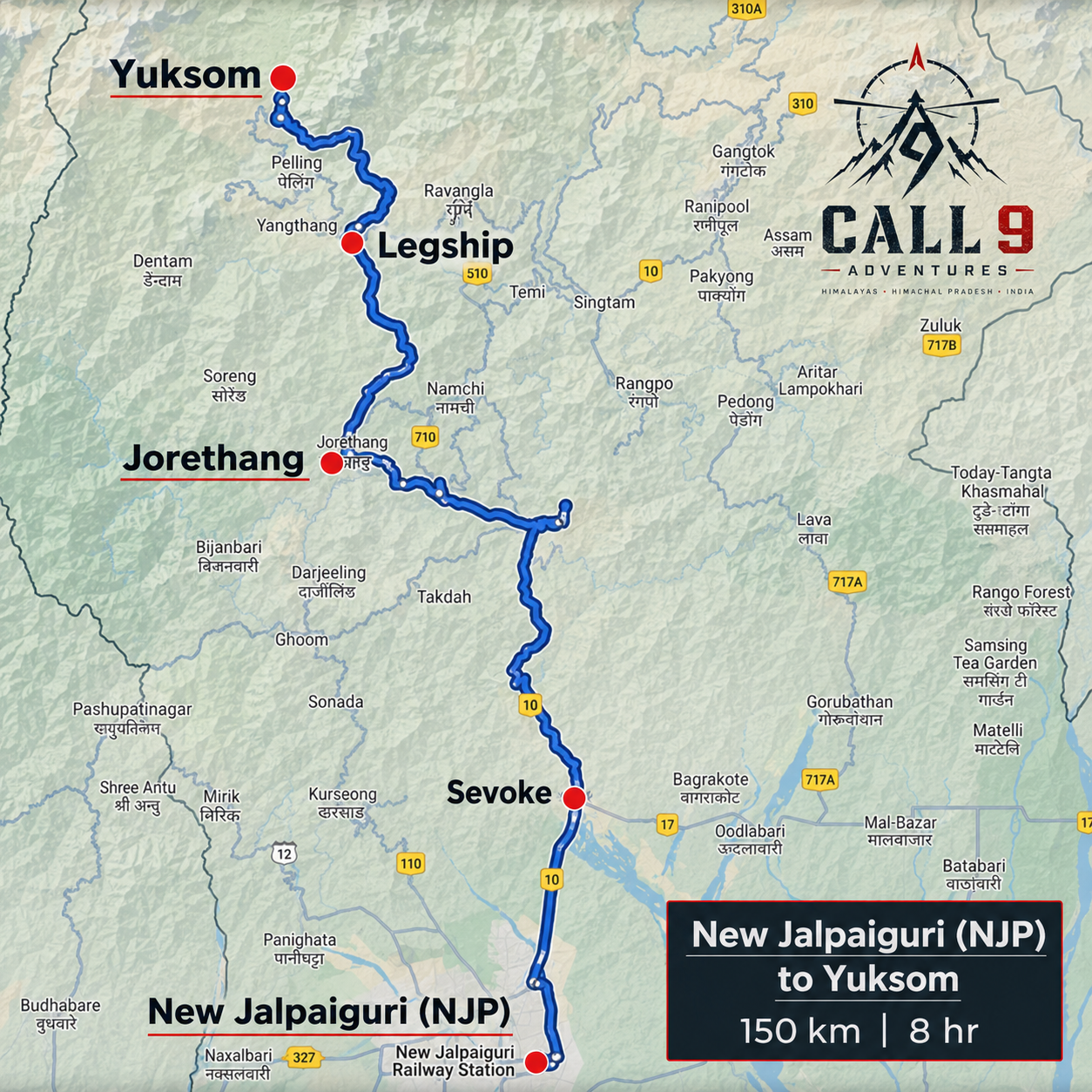
It is essential for everyone to arrive at Siliguri (10:00 am)
Once you have reached New Jalpaiguri Junction (NJP), Call9Adventures will manage the rest of your travel arrangements, if you have opted for Call9Adventure’s pick-up service, you can select this option during the booking process by adding it as an add-on.
Options to reach New Jalpaiguri Junction (NJP) railway station.
1. Take a flight to Bagdogra Airport in West Bengal, and take a cab to NJP railway station, it’s 20 km away and will take 40 minutes.
- Domestic: There are various direct and indirect flights from other cities. You can take direct flights from Delhi, Kolkata, Guwahati and other cities.
- International: International terminal is well equipped with modern amenities. Druk Air is the airline which provides international flights to the passengers. International flights connect with Paro in Bhutan and Bangkok. These flights are direct and comfortable.
2. Take a train to New Jalpaiguri Junction (NJP) that is well-connected to major cities like Kolkata, Guwahati, Delhi and Mumbai.
( If you prefer to travel independently, you can either take a government bus or book a private cab. Your trek coordinator will provide guidance on how to arrange for the bus or cab booking. )
Drop-Off Information
- Arrive in New Jalpaiguri (NJP) between 4:00 pm to 5:00 pm.
- The designated drop-off point is NJP railway station.
- Please consider planning your subsequent travel arrangements after 8:00 pm.
- The distance from Railway Station to Bagdogra Airport is 20 km, it will take approx 40 minutes.
- Call9Adventures offers comfortable transportation through Xylo, Bolero, or equivalent vehicles. If you wish to upgrade your mode of transportation, please contact your trek coordinator for further assistance.
Goechala Trek Cost Terms – Inclusions & Exclusions
Inclusion
1. Accommodation (as per the itinerary):
- Day 1 and Day 11 in a 5 star hotel in Siliguri on triple/quad/penta sharing. (Male and female accommodated separately)
- Day 2 to Day 8 in a Tent (No Sharing).
2. Meals (Veg + Egg):
- Vegetarian sports nutrition, engineered for altitude. No meat, no eggs — just precision-fueled meals, served white-glove at every camp.
3. Support:
- 1 Versatile base camp manager handles communication and deploys extra manpower in emergencies.
- 1 Mountaineering & First aid qualified professional trek Leader.
- 1 Experienced high-altitude chef.
- Local experienced guides (Number of guides depending on the group size).
- Enough support staff.
4. Trek equipment:
- Sleeping bag, Sleeping liners (if required), mattresses, and Utensils.
- 3 men all season trekker tent, Kitchen & Dining tent, Toilet tent.
- Camping stool, Walkie talkie.
- Ropes, Helmet, Ice axe, Harness, Gaiters & microspikes (if required).
5. First aid:
- Medical kit, Stretcher, Oxygen cylinder, Blood pressure monitor, Oximeter, Stethoscope.
6. Transportation (as per the itinerary):
- Transport from Siliguri to Yuksom and return.
7. Mules/porters to carry the central luggage.
8. Cloakroom facility available at the base camp for additional luggage.
9. All necessary permits and entry fees, up to the amount charged for Indians.
10. Services from Yuksom to Yuksom.
11. Trek Completion Certificate.
Exclusion
- Insurance (For non-Indian Nationals, NRI or OCI card holders).
- Food during the transit.
- Any kind of personal expenses.
- Mule or porter to carry personal luggage.
- Emergency evacuation, hospitalization charge, etc.
- Any extra costs incurred due to extension/change of the itinerary due to natural calamities roadblocks, vehicle breakdown, etc. factors beyond our control
- Anything not specifically mentioned under the head Inclusion.
Things can be provided on demand and availability (participant has to pay extra for these things).
1- Gamow/PAC HAPO Bag (Portable Hyperbaric Bag) – is a unique, portable hyperbaric chamber for the treatment of acute mountain sickness (AMS), also known as altitude sickness.
2- AEDs (Automated External Defibrillators) – are portable life-saving devices designed to treat people experiencing sudden cardiac arrest, a medical condition in which the heart stops beating suddenly and unexpectedly.
Goechala Trek Essentials – Complete Packing List
| Item | Requirement / Details |
|---|---|
| 🎒 Backpack with Rain Cover | 50–60 Ltr capacity with comfortable shoulder straps |
| 🎒 Day Pack with Rain Cover | 20–30 Ltr capacity (if off-loading is opted) |
| 🦯 Walking Stick | Advisable — carry at least one |
| 💧 Water Bottle / Hydration Pack | Carry 2 bottles of 1 litre each. If using a hydration pack, carry 1 hydration pack + 1 bottle of 1 litre. Also carry at least one thermos flask. |
| 🍱 Small Tiffin / Lunch Box | 1 No. |
| 🍫 Snacks | Energy bars, dry fruits, Electral/ORS, etc. |
| 🩹 Personal Medical Kit | Carry necessary personal medicines after consulting your doctor. |
| Item | Requirement / Details |
|---|---|
| 👕 T-Shirt (Synthetic Quick-Dry) | 1 Full-Sleeve + 2 Half-Sleeve |
| 🧥 Fleece T-Shirt | 1 No. |
| 🧥 Fleece Jacket | 1 No. |
| 🌬️ Windproof Jacket | 1 No. |
| ❄️ Down Feather / Hollow Jacket | 1 No. |
| 🔥 Thermal Inner (Upper & Lower) | 1 Pair |
| 👖 Trek Pant (Synthetic Quick-Dry) | 2 Nos. |
| 👖 Fleece Pant | 1 No. |
| 🧤 Waterproof Gloves | 1 Pair |
| 🧤 Fleece / Woollen Gloves | 1 Pair |
| 🌧️ Poncho / Waterproof Jacket & Pant | 1 Set |
| Item | Requirement / Details |
|---|---|
| 🔦 Head Torch | 1 No. (Avoid carrying a hand torch) |
| 🧢 Sun Cap | 1 No. |
| 🧶 Woollen Cap | 1 No. |
| 🥷 Balaclava | 1 No. |
| 🧣 Buff / Neck Gaiter | 1 Synthetic + 1 Woollen |
| 🕶️ Sunglasses | UV-protected sunglasses with dark side covers. For people who wear spectacles: (A) Use contact lenses, or (B) use photochromic glasses. |
| Item | Requirement / Details |
|---|---|
| 🥾 Trekking Shoes | 1 Pair – Water-resistant, high-ankle, and with good grip |
| 🩴 Floaters / Flip-Flops | 1 Pair |
| 🧦 Cotton Socks | 6 Pairs |
| 🧦 Woollen Socks | 1 Pair |
| 🦵 Gaiters | 1 Pair (Provided by TTH when required) |
| ❄️ Micro Spikes | 1 Pair (Provided by TTH when required) |
| Item | Requirement / Details |
|---|---|
| 🧴 Sunscreen | 1 No. |
| 🧴 Moisturiser | 1 No. |
| 💄 Chapstick / Lip Balm | 1 No. |
| 🪥 Toothbrush & Toothpaste | 1 Set |
| 🧻 Toilet Paper & Wipes | 1 Pack |
| 🧼 Soap / Hand Sanitizer | 1 No. |
| 🧴 Antibacterial Powder | 1 No. |
| 🧖 Quick-Dry Towel | 1 No. |
Cancellation Terms
To request a cancellation, please email us at info@call9adventures.com using your registered email ID.
Cancellations prior to 25 days from the start of the Trip.
Refund Options
- 5% deduction of trek fee
- 100% trek fee cash voucher for any trip till one year
- Transfer your trek (any trek, any date) to your friend
Cancellation between 14 days and 10 days to the start of the Trip
Refund Options
- 50% deduction of trek fee
- 80% trek fee cash voucher for same trip till one year
- 70% trek fee cash voucher for any trip till one year
- Book the same trek, in the same season, with any other batch
- Transfer your trek (same trek, any date) to your friend
Cancellation less than 9 days to the start of the trek.
Refund Options
- No cash refund
- 20% trek fee cash voucher for the same trip till one year
- 10% trek fee cash voucher for any trip till one year
- Transfer your trek (same trek, same date) to your friend
- To reschedule a trek (same trek only), a 30 % rescheduling fee of the trek cost will apply.
Cancellation Policy (Emergency Cases):
In case of a death in the immediate family (parents, siblings, spouse, children) or if the trekker is hospitalized (min. 48 hours) or suffers a fracture (leg/arm) within a week before the trek, even if canceled a day before:
90% trek fee refund in cash & 10% as a voucher (valid for 1 year, for any India trek).
Valid documents required. We’re here to support you during tough times.
Note:
- Change of trek batch is dependent on the availability of seats in the batch
- In case of transferring a trek to a friend, he/she should satisfy all the mandatory requirements put forward by Call9Adventures
- Call9Adventures holds the right to change/cancel the policies, without prior notice
Booking and Payments
- The Participant is responsible for verifying the accuracy of all details, including Trip dates and personal documentation, at the time of booking.
- Payments must be made in accordance with the timelines and instructions provided by Call9Adventures. Late payments may result in cancellation of booking without refund.
- In the event of a cash refund, only the portion of the payment made in cash shall be eligible for refund in cash. Any booking made using voucher, discounts, promotional codes, or through any non-cash mode of payment shall not be eligible for a cash refund under any circumstances.
- Refunds, if applicable, shall be processed within 15–30 working days of confirmation.
- All add-on bookings are subject to the respective add-on cancellation policy, and refunds will be processed accordingly.
- Voucher Terms
- This is a non-transferable voucher
- This voucher cannot be combined with any other offer or promotion from Call9Adventures.
- This voucher is valid for treks booked directly with Call9Adventures in India.
- To avail the voucher please use your register phone number or e-mail id
- All other terms and conditions applicable to booking a trek with Trek are also applicable to this voucher.
Itinerary and Modifications
- Call9Adventures reserves the right to modify, shorten, or cancel any part of the Trip due to transportation delays, weather, health emergencies, or other unforeseen circumstances including Force Majeure.
Cancellations and Refunds
- No refunds or vouchers, partial or otherwise, shall be provided for voluntary withdrawal, non-utilisation of services, or removal from the Trip.
- If Call9Adventures cancels the Trip before arrival at the designated pick-up point due to unforeseen circumstances or Force Majeure, the Participant may choose from:
- An alternate Trip/date.
- A credit voucher valid for one (1) year.
- Transfer to another Trip, with cost differences payable by the Participant.
- If the Trip is abandoned post-arrival at the designated pick-up point, no cash refund or voucher shall be issued. The Trek Again Policy may apply at Call9Adventure’s discretion.
- Call9Adventures shall not be liable for any associated travel costs such as flights, accommodation, or visa fees.
Force Majeure
- Events beyond its control including but not limited to earthquakes, landslides, strikes, curfews, war, pandemic, government restrictions, heavy rainfall or snowfall, windstorms, road blockages, trail disruption, or withdrawal of permits, Call9Adventures shall not be held liable for any cancellation, delay, or service modification caused by Force Majeure.
Government employees can avail the benefit of Special Casual Leave (SCL) when they join us for a trekking expedition. As per Pay Commission guidelines, up to 30 days of Special Casual Leave can be availed in a calendar year for trekking or mountaineering expeditions conducted through a registered organisation.
Trek The Himalayas is a registered adventure tour operator with the Indian Mountaineering Foundation (IMF) and the Ministry of Tourism (MoT), making your trek eligible for SCL benefits.
To apply, email us at info@call9adventures.com at least 30 days before the trek departure date, with the following details:
- Trek name and trek date
- Booking details
- Full name
- Designation
- Department and department address
This benefit is exclusive to Indian Government employees and is applicable only for treks within India.
- Junior trekkers (below 15 years) should have a company of parents/guardians.
- Trekkers between 15 to 18 years can come solo with the disclaimer form signed by parent/guardian.
- Medical & Disclaimer Form (Mandatory Documents)
Mandatory Documents to Bring on A Trek
Goechala Trek Frequently Asked Questions (FAQ)
To do the Goechala Trek, you need a Sikkim Inner Line Permit, which is mandatory for all trekkers. If you are a foreign national, you will also need a Restricted Area Permit.
For the Goechala Trek, pack warm clothing, sturdy trekking shoes, trekking poles, a first-aid kit, and personal toiletries. Also, bring along snacks and energy bars to keep your energy levels up during the trek.
Yes, the Goechala Trek has a risk of altitude mountain sickness (AMS) due to its high elevations. The trek involves long trekking hours, often taking you to altitudes above 15,000 feet, where the air gets thinner, and oxygen levels drop. To minimize the risk of AMS, it is crucial to acclimatize properly, which is why the itinerary includes acclimatization days. Staying well-hydrated, maintaining a steady pace, and listening to your body are also key to staying safe and healthy on this challenging trek. If you experience symptoms like headache, nausea, or dizziness, inform your trek leader immediately to avoid serious health risks.
Yes, a pair of trekking sticks is highly recommended for this long and challenging trek. You can rent trekking sticks from the Trek the Himalayas rental store for extra support and stability on the trail.
For the Goecha La trek, it’s essential to dress in layers. Wear moisture-wicking base layers, followed by insulating layers like fleece or down jackets, 2-3 trek pants, 4-5 pair socks, warm gloves, sun cap, hat, fleece cap, and thermal inners. Don’t forget to bring thermal innerwear, a hat, gloves, and a scarf or buff to protect against the cold.Improvise, use simple and similar words.
The best treks to do in Sikkim are Bajre Dara and Goechala.
Goechala trek is one of the most famous and very safe treks. It is always recommended to do this trek with an experienced organization. In this trek, the biggest challenge is altitude, for which proper guidance is necessary. Acclimation and hydration are very important. In the Himalayas, weather can be unpredictable too, but with trained leaders, medical kits, and oxygen cylinders carried on the trek, safety is well taken care of.
During the trek, accommodation is mainly in tents set up at campsites. On the first and last day at Yuksom, trekkers stay in guesthouses. Campsites are set up in scenic locations like Tshoka, Dzongri, and Thansing. In these locations, you will experience the raw beauty of Sikkim.
The trek itself is very beautiful, and staying overnight in its beauty gives all the feel of nature, happiness of camping and adventure.
The trek takes 11 days, and the itinerary includes:
- Day 1: Arrival at Yuksom
- Day 2: Yuksom to Sachen
- Day 3: Sachen to Tshoka via Bakhim
- Day 4: Tshoka to Dzongri via Phedang
- Day 5: Acclimatization Day at Dzongri
- Day 6: Dzongri to Thansing via Kokchhurung
- Day 7: Thansing to Lamuney
- Day 8: Lamuney to Goechala via Samiti Lake back to Thansing/Kokchhurung
- Day 9: Thansing/Kokcharang to Tshokha via Phedang
- Day 10: Tshokha to Yuksom via Bakhim and Sachen
- Day 11: Drive from Yuksom to NJP
Yes, here are a few convenient options located within walking distance of NJP Railway Station:
- Tirupati Lodge NJP – Just 200 meters away (approx. 4-minute walk).
- Prince Lodge NJP – A budget-friendly option very close to the station.
- Radha Rani Lodge – Located about a 6-minute walk from the station.
- Hotel Golden Dragon – Another good option, only 6 minutes walking distance from the station.
All these properties are suitable for short stays and provide quick access to the railway station for onward journeys.